Wednesday, December 14, 2011

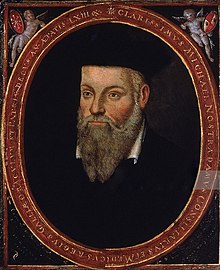
Nostradamus


The King then pulled forth a paper from his pocket, and, ere he gave
it to Martivalle, said, in a tone which resembled that of an apology,
"Learned Galeotti, be not surprised that, possessing in you an oracular
treasure, superior to that lodged in the breast of any now alive, not
excepting the great Nostradamus himself [a French astrologer of the
sixteenth century, author of a book of prophecies, which was condemned
by the papal court in 1781], I am desirous frequently to avail myself of
your skill in those doubts and difficulties which beset every Prince
who hath to contend with rebellion within his land, and with external
enemies, both powerful and inveterate."…

Michel de Nostradame needs no introduction.  Nostradamus was born in 1503, on December 14.  Sir Walter Scott mentions him in “Quentin Durward” (text above).

Tuesday, December 13, 2011

Leaving Malta

‘December 13, [Naples].--We left Malta on this day, and after a most picturesque voyage between the coast of Sicily and Malta arrived here on the 17th, where we were detained for quarantine, whence we were not dismissed till the day before Christmas. I saw Charles, to my great joy, and agreed to dine with his master, Right Hon. Mr. Hill, resolving it should be my first and last engagement at Naples. Next morning much struck with the beauty of the Bay of Naples. It is insisted that my arrival has been a signal for the greatest eruption from Vesuvius which that mountain has favoured us with for many a day. I can only say, as the Frenchman said of the comet supposed to foretell his own death, "Ah, messieurs, la comète me fait trop d'honneur." Of letters I can hear nothing. There are many English here, of most of whom I have some knowledge.’

Naples is sounding pretty good right about now, with winter temperatures finally arriving.  Scott arrived on December 13, 1831 (per his journal), and did not leave until April 16th, the following year.  From Naples, the Scott tour headed to Rome.  Scott’s bid to regain health succeeded only so far, as he lived less than six months past April.

Monday, December 12, 2011

Robert Browning


December 12 is the 112th anniversary of poet Robert Browning’s death, which occurred in 1899.  From “Complete Works of Robert Browning” comes the story of one Donald, with a reference to Sir Walter Scott: 

‘Donald. An anecdote of a sportsman told in a Highland bothie to a band of young Oxford fellows, when their adventures in praise of sport were going the rounds, in order to exemplify the cruel and degrading side of the sportsman's instinct. The teller of the story says he heard it from a ghastly wreck of a man, who burst into just such a merry bothie circle as theirs to tell how once, in taking the short cut over a mountain, at the narrowest part of the footway a stag blocked the path, and how, instead of butting him over the precipice, it halted, and understood the course that flashed upon him,—to let himself down flat and let the beast step over him. This it did, with slow, careful intelligence, when just as the creature stood above him the sportsman got the better of the man in him. He drew out his dirk and stabbed. Over the beast fell, the human beast on top, his life saved, however, by falling on the stag, but his bones so broken that he was a cripple the rest of his days, his only resource hobbling into hunting-bothies with the head and hide of the stag, to tell, for the sake of the food and alms it brought him, his story of huge sport.

The story is true, Mrs. Orr says, "repeated to Browning by one who had heard it from the so-called Donald himself." Sir Walter Scott tells it, in "The Keepsake" for 1832, substantially as Browning gives it, and as he also had heard it, with the exception that the mountaineer is going in quest of a sheep or goat missing from his flock instead of to meet a lassie at the bridge below, as Browning perhaps chooses to say. Sir Walter closes his account as follows: "I never could approve of [his] conduct towards the deer in a moral point of view, . . . but the temptation of a hart of grease offering, as it were, his throat to the knife, would have subdued the virtue of almost any deer-stalker."…’

Sunday, December 11, 2011

Letters on Natural Magic


Scottish physicist Sir David Brewster was born this day, December 11th, 1781.  Brewster was roughly ten years older than Walter Scott.  Among other things, Brewster is known for his studies on diffraction of light.  He has a very direct connection with Walter Scott in his “Letters on Natural Magic”, which was addressed to Scott.  That work begins with:

‘MY DEAR SIR WALTER,
As it was at your suggestion that 1 undertook to draw up a popular account of those prodigies of the material world which have received the appellation of Natural Magic, 1 have availed myself of the privilege of introducing it under the shelter of your name. Although I cannot hope to produce a volume at all approaching in interest to that which you have contributed to the Family Library, yet the popular character of some of the topics which belong to this branch of Demonology may atone for the defects of the following Letters; and I shall deem it no slight honour if they shall be considered as forming an appropriate supplement to your valuable work.
The subject of Natural Magic is one of great extent a well as of deep interest. In its widest range, it embraces the history of the governments and the superstitions of ancient times,—of the means by which they maintained their influence over the human mind,—of the assistance which they derived from the arts and the sciences, and from a knowledge of the powers and phenomena of nature. When the tyrants of antiquity were unable or unwilling to found their sovereignty on the affections and interests of their people, they sought to intrench themselves in the strongholds of supernatural influence, and to rule with the delegated authority of Heaven. The prince, the priest, and the sage, were leagued in a dark conspiracy to deceive and enslave their species ; and man, who refused his submission to a being like himself, became the obedient slave of a spiritual despotism, and willingly bound himself in chains when they seemed to have been forged by the gods.
This system of imposture was greatly favoured by the ignorance of these early ages. The human mind is at all times fond of the marvellous, and the credulity of the individual may be often measured by his own attachment to the truth. When knowledge was the property of only one caste, it was by no means difficult to employ it in the subjugation of the great mass of society. An acquaintance with the motions of the heavenly bodies, and the variations in the state of the atmosphere, enabled its possessor to predict astronomical and meteorological phenomena with a frequency and an accuracy which could not fail to invest him with a divine character. The power of bringing down fire from the heavens, even at times when the electric influence was itself in a state of repose, could be regarded only as a gift from heaven. The power of rendering the human body insensible to fire was an irresistible instrument of imposture; and in the combinations of chemistry, and the influence of drugs and soporific embrocations on the human frame, the ancient magicians found their most available resources.
The secret use which was thus made of scientific discoveries and of remarkable inventions, has no doubt prevented many of them from reaching the present times; but though we are very ill informed respecting the progress of the ancients in various departments of the physical sciences, yet we have sufficient evidence that almost every branch of knowledge had contributed its wonders to the magician's budget, and we may even obtain some insight/into the scientific acquirements of former ages, by a diligent study of their fables and their miracles.
The science of Acoustics furnished the ancient sorcerers with some of their best deceptions. The imitation of thunder in their subterranean temples could not fail to indicate the .presence of a supernatural agent. The golden virgins whose ravishing voices resounded through the temple of Delphos;—the stone from the river Pactolus, whose trumpet notes scared the robber from the treasure which it guarded;—the speaking head which uttered its oracular responses at Lesbos ; and the vocal statue of Memnon, which began at the break of day to accost the rising sun,—were all deceptions derived from science, and from a diligent observation of the phenomena of nature…’
Saturday, December 10, 2011

Anne Hyde


‘Monday 10 December 1660…So hearing that the Duke of York is gone down this morning, to see the ship sunk yesterday at Woolwich, he and I returned by his coach to the office, and after that to dinner. After dinner he came to me again and sat with me at my house, ands among other discourse he told me that it is expected that the Duke will marry the Lord Chancellor’s daughter at last which is likely to be the ruin of Mr. Davis and my Lord Barkley, who have carried themselves so high against the Chancellor; Sir Chas. Barkley swearing that he and others had lain with her often, which all believe to be a lie…’


Samuel Pepys refers to the Lord Chancellor’s daughter, in his diary entry for December 10, 1660.  The woman in question is Anne Hyde.  The Duke of York did marry her.  Walter Scott mentions Ms. Hyde in his biographical sketch, the”Life of Dryden”:

 ‘  The conversion of Dryden [to Catholicism] did not long remain unrewarded, nor was his pen suffered to be idle in the cause which he had adopted. On the 4th of March, 1685-6, an hundred pounds a-year, payable quarterly, was added to his pension; and probably he found himself more at ease under the regular and economical government of James, than when his support depended on the exhausted exchequer of Charles. Soon after the granting of this boon, he was employed to defend the reasons of conversion to the Catholic faith, alleged by Anne Hyde, Duchess of York, which, together with two papers on a similar subject, said to have been found in Charles the Second's strong box, James had with great rashness given to the public. Stillingfleet, now at the head of the champions of the Protestant faith, published some sharp remarks on these papers. Another hand, probably that of a Jesuit, was employed to vindicate against him the royal grounds of conversion; while to Dryden was committed the charge of defending those alleged by the Duchess. The tone of Dryden's apology was, to say the least, highly injudicious, and adapted to irritate the feelings of the clergy of the Established.’

Friday, December 9, 2011

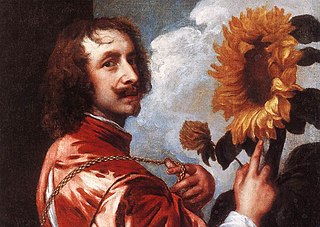
Anthony van Dyck

‘…In the meantime, the gentleman and lady continued to advance, directing their course to a rustic seat, which still enjoyed the sunbeams, and was placed adjacent to the tree where the stranger was concealed.
The man was elderly, yet seemed bent more by sorrow and infirmity, than by the weight of years. He wore a mourning cloak, over a dress of the same melancholy colour, cut in that picturesque form which Vandyck2 has rendered immortal. 

2) Sir Anthony Vandyck (1599-1641), the famous Flemish painter. He was knighted and made court painter to Charles I. in 1632. His portraits of the king and the royal family are among his best-known works.’

We continue with Walter Scott’s “Woodstock” today, with text and a note concerning Sir Anthony van Dyck.  Van Dyck was Flemish, and benefited from Charles I’s interest in art.  Anthony van Dyck died on December 9th, 1641

Thursday, December 8, 2011

John Pym

‘…There were, however, two of the household at Woodstock, who appeared not so entirely reconciled with Louis Kerneguy or his purposes. The one was Bevis, who seemed, from their first unfriendly rencontre, to have kept up a pique against their new guest, which no advances on the part of Charles were able to soften. If the page was by chance left alone with his young mistress, Bevis chose always to be of the party; came close by Alice's chair, and growled audibly when the gallant drew near her. "It is a pity," said the disguised prince, "that your Bevis is not a bull-dog, that we might dub him a roundhead at once— He is too handsome, too noble, too aristocratic, to nourish those inhospitable prejudices against a poor houseless cavalier. I am convinced the spirit of Pym1  or Hampden.…

1) John Pym (1584-1643), the Parliamentary leader, prominent in the impeachment of Buckingham, Strafford and Laud. He was one of the "five members" whose attempted arrest by Charles I in January. 1, 1642 hastened the outbreak of civil war.’

Puritan John Pym was a leader in the Long Parliament, and was very much in opposition to King Charles I, as the note to the text of Walter Scott’s “Woodstock” above attests.  “Woodstock” was set in 1651, around Charles I’s son Charles II’s escape from England.  Among other accomplishments, John Pym also negotiated the Solemn League and Covenant in 1643, not long before his death, which occurred on December 8th, 1643.