Showing posts with label December 9. Show all posts

Friday, December 9, 2011

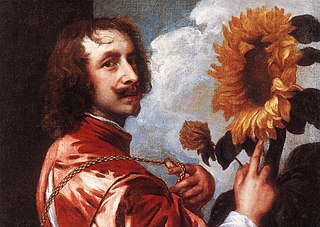
Anthony van Dyck

‘…In the meantime, the gentleman and lady continued to advance, directing their course to a rustic seat, which still enjoyed the sunbeams, and was placed adjacent to the tree where the stranger was concealed.
The man was elderly, yet seemed bent more by sorrow and infirmity, than by the weight of years. He wore a mourning cloak, over a dress of the same melancholy colour, cut in that picturesque form which Vandyck2 has rendered immortal. 

2) Sir Anthony Vandyck (1599-1641), the famous Flemish painter. He was knighted and made court painter to Charles I. in 1632. His portraits of the king and the royal family are among his best-known works.’

We continue with Walter Scott’s “Woodstock” today, with text and a note concerning Sir Anthony van Dyck.  Van Dyck was Flemish, and benefited from Charles I’s interest in art.  Anthony van Dyck died on December 9th, 1641

Thursday, December 9, 2010

Malcolm IV of Scotland

'In Malcolm's reign the lords of the Hebridean islands, who were in a state of independence, scarcely acknowledging even a nominal allegiance either to the crown of Scotland or that of Norway, though claimed by both countries, began to give much annoyance to the western coasts of Scotland, to which their light-armed galleys or birlins, and their habits of piracy, gave great facilities. Somerled was at this time lord of the isles, and a frequent leader in such incursions. Peace was made with this turbulent chief in 1153; but in 1164, ten years after, Somerled was again in arms, and fell, attempting a descent at Renfrew.


Malcolm IV. 's transactions with Henry of England were of greater moment. Henry (second of the name) had sworn (in 1149) that if he ever gained the English crown he would put the Scottish king in possession of Carlisle, and of all the country lying between Tweed and Tyne; but, when securely seated on the throne, instead of fulfilling his obligation, he endeavored to deprive Malcolm of such possessions in the northern counties as yet remained to him, forgetting his obligations to his great-uncle David, and his relationship to the young king his grandson. The youth and inexperience of Malcolm seem on this occasion to have been circumvented by the sagacity of Henry, who was besides, in point of power, greatly superior to the young Scots prince. Indeed, it would appear that the English sovereign had acquired a personal influence over his kinsman, of which his Scottish subjects had reason to be jealous. Malcolm yielded up to Henry all his possessions in Cumberland and Northumberland; and when it is considered that his grandfather David had not been able to retain them with any secure hold, even when England was distracted with the civil wars of Stephen and Matilda, it must be owned that his descendant, opposed to Henry II. in his plenitude of undisputed power, had little chance to make his claim good. He also did homage for Lothian, to the great scandal of Scottish historians, who, conceiving his doing so affected the question of Scottish independence, are much disposed 3

Wednesday, December 9, 2009

John Milton

"John Milton!" exclaimed Sir Henry in astonishment-"What! John Milton, the blasphemous and bloody-minded author of the Defensio Populi Anglicani!- the advocate of the infernal High Court of Fiends; the creature and parasite of that grand impostor, that loathsome hypocrite, that detestable monster, that prodigy of the universe, that disgrace of mankind, that landscape of iniquity, that sink of sin, and that compendium of baseness, Oliver Cromwell! "

" Even the same John Milton, answered Charles..."

These lines are from Scott's Woodstock, which was published during the economic downturn of 1826. The novel's setting is the English Civil War (c. 1651), and the quote given to Sir Henry Lee is clearly unfavorable to a supporter of Cromwell. Samuel Johnson, a devout Tory, described Milton as "an acrimonious and surly republican."

John Milton was born December 9, 1608.