Showing posts with label Woodstock. Show all posts

Friday, July 27, 2012

zzzzzzz


‘…When I was a young lad,
My fortune was bad— 

Pshaw! This is not the tune it goes to." Here he fell fast asleep, and sooner or later all his companions in misfortune followed his example.

The benches intended for the repose of the soldiers of the guard, afforded the prisoners convenience enough to lie down, though their slumbers, it may be believed, were neither sound nor undisturbed. But when daylight was but a little while broken, the explosion of gunpowder which took place, and the subsequent fall of the turret to which the mine was applied, would have awakened the Seven Sleepers 1, or Morpheus himself. The smoke, penetrating through the windows, left them at no loss for the cause of the din.

1) Seven Christian youths who are said to have concealed themselves in a cavern near Ephesus during a persecution in the third century, and to have fallen asleep there, not awaking until two or three hundred years later, when Christianity had become the religion of the empire...'

Waking the Seven Sleepers would have been quite a task.  The seven youths of Ephesus woke in the 5th century, according to the story, two centuries after they began snoring.  July 27th is the feast day, so grab six friends, and enjoy a nap.  Scott’s text above comes from “Woodstock”.

Friday, July 13, 2012

Battle of Roundway Down


‘CHAPTER XXXVIII
My life was of a piece,
Spent in your service — dying at your feet.
Don Sebastian.

YEARS rush by us like the wind. We see not whence the eddy comes, nor whitherward it is tending, and we seem ourselves to witness their flight without a sense that we are changed; and yet Time is beguiling man of his strength, as the winds rob the woods of their foliage.

After the marriage of Alice and Markham Everard, the old knight resided near them, in an ancient manor-house, belonging to the redeemed portion of his estate, where Joceline and Phoebe, now man and wife, with one or two domestics, regulated the affairs of his household. When he tired of Shakspeare and solitude, he was ever a welcome guest at his son-in-law's, where he went the more frequently that Markham had given up all concern in public affairs, disapproving of the forcible dismissal of the Parliament, and submitting to Cromwell's subsequent domination rather as that which was the lesser evil than as to a government which he regarded as legal. Cromwell seemed ever willing to show himself his friend; but Everard, resenting highly the proposal to deliver up the King, which he considered as an insult to his honour, never answered such advances, and became, on the contrary, of the opinion, which was now generally prevalent in the nation, that a settled government could not be obtained without the recall of the banished family. There is no doubt that the personal kindness which he had received from Charles rendered him the more readily disposed to such a measure. He was peremptory, however, in declining all engagements during Oliver's life, whose power he considered as too firmly fixed to be shaken by any plots which could be formed against it.

Meantime, Wildrake continued to be Everard's protected dependant as before, though sometimes the connexion tended not a little to his inconvenience. That respectable person, indeed, while he remained stationary in his patron's house or that of the old knight, discharged many little duties in the family, and won Alice's heart by his attention to the children, teaching the boys, of whom they had three, to ride, fence, toss the pike, and many similar exercises; and, above all, filling up a great blank in her father's existence, with whom he played at chess and backgammon, or read Shakspeare, or was clerk to prayers when any sequestrated divine ventured to read the service of the church; or he found game for him while the old gentleman continued to go a-sporting; and, especially, he talked over the storming of Brentford, and the battles of Edgehill, Banbury, Roundway Down, and others — themes which the aged Cavalier delighted in, but which he could not so well enter upon with Colonel Everard, who had gained his laurels in the Parliament service…’

A number of the English Civil War battles are mentioned in Walter Scott’s “Woodstock”.  The Battle of Roundway Down was fought this day, July 13th, in 1643.  It was an unlucky day for Parliamentarian forces under Sir William Waller, and a better day for Lord Ralph Hopton, and  Royalist interests.

Tuesday, July 10, 2012

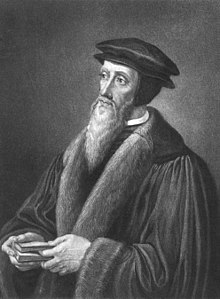
Calvin Born


Sir Walter Scott coined many phrases in his day.  Related to religious reformer John Calvin, according to Kenneth Stewart in “Ten Myths about Calvinism: Recovering the Breadth of the Reformed Tradition”, usage of the term ‘Calvinistic’ comes courtesy of Scott.

‘…The terms Calvinism and Calvinist have been in the English language since the 1570’s, but their enduring and widespread usage has reflected the embrace of a series of assumptions about Calvin and Geneva that are, on examination, overplayed *

‘* The compact edition of the Oxford English Dictionary of 1971 records an earliest usage of 1566 for the archaic form of Calvynian, of 1570 for Calvynisme, and of 1579 for Calvynyste; by contrast, the form Calvinistic does not appear until Sir Walter Scott employed it in 1820….’

In “Woodstock”, Scott shows how members of the Protestant clergy would sometimes dress like their Genevan counterparts, in honor of Calvin.  

‘After some time spent in waiting for him, Mr. Holdenough began to walk up the aisles of the chapel, not with the slow and dignified carriage with which the old Rector was of yore wont to maintain the dignity of the surplice, but with a hasty step like one who arrives too late at an appointment, and bustles forward to make the best use of his time. He was a tall thin man, with an adust complexion, and the vivacity of his eye indicated some irascibility of temperament. His dress was brown, not black, and over his other vestments he wore, in honour of Calvin, a Geneva cloak of a blue colour, which fell backwards from his shoulders as he posted on to the pulpit. His grizzled hair was cut as short as shears could perform the feat, and covered with a black silk skull-cap, which stuck so close to his head, that the two ears expanded from under it as if they had been intended as handles by which to lift the whole person. Moreover, the worthy divine wore spectacles, and a long grizzled peaked beard, and he carried in his hand a small pocket-bible with silver clasps. Upon arriving at the pulpit, he paused a moment to take breath, then began to ascend the steps by two at a time.’

John Calvin was born on July 10, 1509.

Wednesday, May 30, 2012

Rising at Kent


‘30th May, 1648. There was a rising now in Kent, my 
Lord of Norwich being at the head of them. Their first 
rendezvous was in Broome-field, next my house at Sayes 
Court, whence they went to Maidstone, and so to Col- 
chester, where was that memorable siege. ‘

The passage above is from John Evelyn’s diary.  The Royalist rising in Kent is referred to by Walter Scott in “Woodstock”, with Lord Holland involved.

‘…"Not without some danger, though," muttered Louis, thinking of his
encounter with Bevis on the preceding evening.

"No, not without danger, indeed," echoed the knight; "but, as old Will
says,--

  'There's such divinity doth hedge a king,
  That treason dares not peep at what it would.'

"No, no--thank God, that's cared for; our Hope and Fortune is escaped,
so all news affirm, escaped from Bristol--if I thought otherwise,
Albert, I should be as sad as you are. For the rest of it, I have lurked
a month in this house when discovery would have been death, and that is
no longer since than after Lord Holland and the Duke of Buckingham's
rising at Kingston; and hang me, if I thought once of twisting my brow
into such a tragic fold as yours, but cocked my hat at misfortune as a
cavalier should."…’

Wednesday, April 25, 2012

Cromwell Born


‘Since it hath pleased the Almighty God, out of his infinite mercy, so to make us happy, by restoring of our native King to us, and us unto our native liberty through him, that now the good may say, magna temporum felicitas ubi sentire quoe velis, et dicere licet quoe sentias, we cannot but esteem ourselves engaged in the highest of degrees, to render unto him the highest thanks we can express. Although, surpris'd with joy, we become as lost in the performance; when gladness and admiration strikes us silent, as we look back upon the precipice of our late condition, and those miraculous deliverances beyond expression. Freed from the slavery, and those desperate perils, we dayly lived in fear of, during the tyrannical times of that detestable usurper, Oliver Cromwell; he who had raked up such judges, as would wrest the most innocent language into high treason, when he had the cruel conscience to take away our lives, upon no other ground of justice or reason, (the stones of London streets would rise to witness it, if all the citizens were silent.) And with these judges had such councilors, as could advise him unto worse, which will less want of witness…’

The text above helps set the scene for Walter Scott’s “Woodstock”. The "detestable usurper" referred to, Oliver Cromwell, was born on April 25th, 1599.

Monday, April 9, 2012

Naseby/Royal Charles


9th April, 1655. I went to see the great ship newly built by the usurper, Oliver, carrying ninety-six brass guns, and 1,000 tons burden. In the prow was Oliver on horseback, trampling six nations under foot, a Scot, Irishman, Dutchman, Frenchman, Spaniard, and English, aswas easily made out by their several habits. A Fame held a laurel over his insulting head; the word, God with us.

John Evelyn’s diary shows the author in front of what must be the Naseby, so named after the usurper Oliver Cromwell’s victory at the Battle of Naseby, in 1645.  This ship was later, in 1660, renamed the HMS Royal Charles.  Cromwell figures in Walter Scott’s “Woodstock”, as indicated in the preface to that work:

‘Since it hath pleased the Almighty God, out of his infinite mercy, so to
make us happy, by restoring of our native King to us, and us unto our
native liberty through him, that now the good may say, _magna temporum
felicitas ubi sentire quoe velis, et dicere licet quoe sentias_, we
cannot but esteem ourselves engaged in the highest of degrees, to render
unto him the highest thanks we can express. Although, surpris'd with
joy, we become as lost in the performance; when gladness and admiration
strikes us silent, as we look back upon the precipiece of our late
condition, and those miraculous deliverances beyond expression. Freed
from the slavery, and those desperate perils, we dayly lived in fear of,
during the tyrannical times of that detestable usurper, Oliver Cromwell;
he who had raked up such judges, as would wrest the most innocent
language into high treason, when he had the cruel conscience to take
away our lives, upon no other ground of justice or reason, (the stones
of London streets would rise to witness it, if all the citizens were
silent…’

Monday, March 12, 2012

John Aubrey

English antiquarian John Aubrey was born on March 12, 1626.  Aubrey was the discoveror of the Avebury henge.  Some of Aubrey’s correspondence ties in to the work of Sir Walter Scott.  From John Britton’s “Life of John Aubrey…”:

‘In the same year Aubrey was collecting information concerning the mysterious noises which disturbed the Parliamentary commissioners at Woodstock (1) and we find that in 1651 he witnessed the execution of Christopher Love, on Tower Hill, on a charge of high treason.  “I did see Mr. Christopher Love beheaded on Tower Hill in a delicate clear day; about half an hour after his head was struck off the clouds gathered blacker and blacker, and such terrible claps of thunder came, that I never heard greater,” Miscellanies  Chapter on Omens.  The superstition here countenanced by Aubrey was implicitly believed by the inhabitants of Kingston St. Michael seventy years ago; when a thunder storm, occurring immediately after the execution of a murderer near the parish, was a special indication of divine anger. 

(1)  See a letter addressed to Aubrey on March 11, 1649, and printed by Aubrey in his Miscellanies.  The same topic has afforded Sir Walter Scott the groundwork for his interesting romance of Woodstock.’

Friday, December 9, 2011

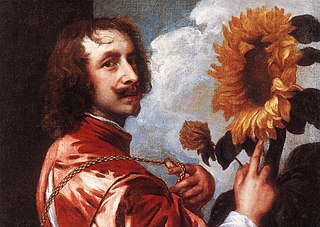
Anthony van Dyck

‘…In the meantime, the gentleman and lady continued to advance, directing their course to a rustic seat, which still enjoyed the sunbeams, and was placed adjacent to the tree where the stranger was concealed.
The man was elderly, yet seemed bent more by sorrow and infirmity, than by the weight of years. He wore a mourning cloak, over a dress of the same melancholy colour, cut in that picturesque form which Vandyck2 has rendered immortal. 

2) Sir Anthony Vandyck (1599-1641), the famous Flemish painter. He was knighted and made court painter to Charles I. in 1632. His portraits of the king and the royal family are among his best-known works.’

We continue with Walter Scott’s “Woodstock” today, with text and a note concerning Sir Anthony van Dyck.  Van Dyck was Flemish, and benefited from Charles I’s interest in art.  Anthony van Dyck died on December 9th, 1641

Thursday, December 8, 2011

John Pym

‘…There were, however, two of the household at Woodstock, who appeared not so entirely reconciled with Louis Kerneguy or his purposes. The one was Bevis, who seemed, from their first unfriendly rencontre, to have kept up a pique against their new guest, which no advances on the part of Charles were able to soften. If the page was by chance left alone with his young mistress, Bevis chose always to be of the party; came close by Alice's chair, and growled audibly when the gallant drew near her. "It is a pity," said the disguised prince, "that your Bevis is not a bull-dog, that we might dub him a roundhead at once— He is too handsome, too noble, too aristocratic, to nourish those inhospitable prejudices against a poor houseless cavalier. I am convinced the spirit of Pym1  or Hampden.

1) John Pym (1584-1643), the Parliamentary leader, prominent in the impeachment of Buckingham, Strafford and Laud. He was one of the "five members" whose attempted arrest by Charles I in January. 1, 1642 hastened the outbreak of civil war.’

Puritan John Pym was a leader in the Long Parliament, and was very much in opposition to King Charles I, as the note to the text of Walter Scott’s “Woodstock” above attests.  “Woodstock” was set in 1651, around Charles I’s son Charles II’s escape from England.  Among other accomplishments, John Pym also negotiated the Solemn League and Covenant in 1643, not long before his death, which occurred on December 8th, 1643. 

Tuesday, June 14, 2011

Battle of Naseby

'Long and steadily did Sir Henry gaze on the letter, so that it might almost seem as if he were getting it by heart. He then placed it carefully in his pocket-book, and asked Alice the account of her adventures of the preceding night. They were briefly told. Their midnight walk through the Chase had been speedily and safely accomplished. Nor had the King once made the slightest relapse into the naughty Louis Kerneguy. When she had seen Charles and his attendant set off, she had taken some repose in the cottage where they parted. With the morning came news that Woodstock was occupied by soldiers, so that return thither might have led to danger, suspicion, and inquiry. Alice therefore did not attempt it, but went to a house in the neighbourhood, inhabited by a lady of established loyalty, whose husband had been major of Sir Henry Lee's regiment, and had fallen at the battle of Naseby. Mrs. Aylmer was a sensible woman, and indeed the necessities of the singular times had sharpened every one's faculties for stratagem and intrigue. She sent a faithful servant to scout about the mansion at Woodstock, who no sooner saw the prisoners dismissed and in safety, mid ascertained the Knight's destination for the evening, than he carried the news to his mistress, and by her orders attended Alice on horseback to join her father.'

The text above is from Walter Scott's "Woodstock".   The Battle of Naseby strongly impacted the outcome of the First English Civil War.  Charles I's forces, led by Prince Rupert of the Rhine were overcome by Parliamentarians, under Thomas Fairfax and Oliver Cromwell.  The Battle of Naseby took place on June 14, 1645.

Thursday, April 14, 2011

In a fog at Barnet

"You are wrong, Albert, you are wrong," said the King, pitilessly pursuing his jest. "You Colonels, whether you wear blue or orange sashes, are too pretty fellows to be dismissed so easily, when once you have acquired an interest. But Mistress Alice, so pretty, and who wishes the restoration of the King with such a look and accent, as if she were an angel whose prayers must needs bring it down, must not be allowed to retain any thoughts of a canting roundhead—What say you—will you give me leave to take her to task about it ?—After all, I am the party most concerned in maintaining true allegiance among my subjects; and if I gain the pretty maiden's good-will, that of the sweetheart's will soon follow. This was jolly King Edward's way—Edward the Fourth, you know. The king-making Earl of Warwick—the Cromwell of his day —dethroned him more than once; but he had the hearts of the merry dames of London, and the purses and veins of the cockneys bled freely, till they brought him home again. How say you ?—shall I shake off my northern slough, and speak with Alice in my own character, showing what education and manners have done for me, to make the best amends they can for an ugly face?"

Note:
'Richard Neville, Earl of Warwick (1428-1471), called the "KingMaker" from his political and military authority during the Wars of the Roses. He fought now on one side and now on the other, and was finally killed by Edward IV. at the battle of Barnet.

Warwick the kingmaker had a short but eventful life, dying in battle at the age of 42.  The date was April 14, 1471.  Representing Lancastrian interests in the Battle of Barnet, Neville was killed while trying to leave the field, which was so foggy as to cause significant "friendly fire".  The reference to Warwick above, comes from Walter Scott's "Woodstock".

Sunday, January 30, 2011

Cromwell Posthumously Executed

'The figure of Oliver Cromwell was, as is generally known, in no way prepossessing. He was of middle stature, strong and coarsely made, with harsh and severe features, indicative, however, of much natural sagacity and depth of thought. His eyes were grey and piercing; his nose too large in proportion to his other features, and of a reddish hue.


His manner of speaking, when he had the purpose to make himself distinctly understood, was energetic and forcible, though neither graceful nor eloquent. No man could on such occasion put his meaning into fewer and more decisive words. But when, as it often happened, he had a mind to play the orator, for the benefit of people's ears, without enlightening their understanding, Cromwell was wont to invest his meaning, or that which seemed to be his meaning, in such a mist of words, surrounding it with so many exclusions and exceptions, and fortifying it with such a labyrinth of parentheses, that though one of the most shrewd men in England, he was, perhaps, the most unintelligible speaker that ever perplexed an audience. It has been long since said by the historian, that a collection of the Protector's speeches would make, with a few exceptions, the most nonsensical book in the world; but he ought to have added, that nothing could be more nervous, concise, and intelligible, than what he really intended should be understood.

It was also remarked of Cromwell, that though born of a good family, both by father and mother, and although he had the usual opportunities of education and breeding connected with such an advantage, the fanatic democratic ruler could never acquire, or else disdained to practise, the courtesies usually exercised among the higher classes in their intercourse with each other. His demeanour was so blunt as sometimes might be termed clownish, yet there was in his language and manner a force and energy corresponding to his character, which impressed awe, if it did not impose respect; and there were even times when that dark and subtle spirit expanded itself, so as almost to conciliate affection. The turn for humour, which displayed itself by fits, was broad, and of a low, and sometimes practical character. Something there was in his disposition congenial to that of his countrymen; a contempt of folly, a hatred of affectation, and a dislike of ceremony, which, joined to the strong intrinsic qualities of sense and courage, made him in many respects not an unfit representative of the democracy of England...'

Sir Walter Scott's description of Oliver Cromwell comes from "Woodstock".  On January 30, 1661, Cromwell's dead body was exhumed from Westminster Abbey for a symbolic execution.  His head remained on display outside Westminster Hall until 1685.  January 30 was the day on which, in 1649, Charles I had been beheaded.

Thursday, December 16, 2010

Lord Protector

'He started at first, rousing himself with the sensation of one who awakes in a place unknown to him; but the localities instantly forced themselves on his recollection. The lamp burning dimly in the socket, the wood fire almost extinguished in its own white embers, the gloomy picture over the chimney-piece, the sealed packet on the table--all reminded him of the events of yesterday, and his deliberations of the succeeding night. "There is no help for it," he said; "it must be Cromwell or anarchy. And probably the sense that his title, as head of the Executive Government, is derived merely from popular consent, may check the too natural proneness of power to render itself arbitrary. If he govern by Parliaments, and with regard to the privileges of the subject, wherefore not Oliver as well as Charles? But I must take measures for having this conveyed safely to the hands of this future sovereign prince. It will be well to take the first word of influence with him, since there must be many who will not hesitate to recommend counsels more violent and precipitate."...'

The text above is from Walter Scott's "Woodstock", which is set in 1651; the English Civil War.  Oliver Cromwell figures prominently in this novel.  Cromwell became Lord Protector of England, Scotland and Ireland on December 16, 1653.

Wednesday, October 20, 2010

Christopher Wren

'It is not my purpose to inform my readers how the manuscripts of that eminent antiquary, the Rev. J. A. Rochecliffe, D. D., came into my possession. There are many ways in which such things happen, and it is enough to say they were rescued from an unworthy fate, and that they were honestly come by. As for the authenticity of the anecdotes which I have gleaned from the writings of this excellent person, and put together with my own unrivalled facility, the name of Doctor Rochecliffe will warrant accuracy, wherever that name happens to be known.


With his history the reading part of the world are well acquainted ; and we might refer the tyro to honest Anthony A Wood, who looked up to him as one of the pillars of High Church, and bestows on him an exemplary character in the Athenae Oxonienses, although the Doctor was educated at Cambridge, England's other eye.'
 
The character Doctor Rochecliffe, which appears in Sir Walter Scott's "Woodstock, or the Cavalier" (text above), connects today's subject, Sir Christopher Wren, with Walter Scott.  Christopher Wren was born on October 20, 1632. 
 
The architect Wren is best known for his redesign of St. Paul's Cathedral in London.  The connection to the Rochecliffe character comes through a friend of Wren's uncle, Bishop Matthew Wren, who led the effort to rebuild St. Paul's after it had been damaged by Puritans.  As related by Lucy Phillimore in "Christopher Wren": 'Bishop Wren held firmly to his trust in Monk's loyalty, though many things might well have shaken his confidence.  In the curious life of Dr. John Barwick, one of the king's most faithful agents, from whom Sir Walter Scott may have taken many of the features of the indefatigable plotter 'Dr. Rochecliffe' it is said that he (Dr. Barwick) 'often heard the Right Reverend Bishop of Ely promise himself all he could wish from the General's fidelity.'   '

Tuesday, April 20, 2010

Rump Parliament Dissolved

" And as for the rumps of beeves," continued Tomkins, with the same solemnity, " there is a rump at Westminster, which will stand us of the army much hacking and hewing yet, ere it is discussed to our mind."


Sir Henry paused, as if to consider what was the meaning of this innuendo; for he was not a person of very quick apprehension. But having at length caught the meaning of it, he burst into an explosion of louder laughter than Joceline had seen him indulge in for a good while.

" Right, kuave," he said, " I taste- thy jest-It is the very moral of the puppetshow. Faustus raised the devil, as the Parliament raised the army, and then, as the devil flies away with Faustus, so will the army fly away with the Parliament, or the rump, as thou call'st it, or sitting part of the so-called Parliament. And then, look you, friend, the very devil of all hath my willing consent to fly away with the army in its turn, from the highest general down to the lowest drum-boy. Nay, never look fierce for the matter; remember there is daylight enough now for a game at sharps."
 
Scott's novel Woodstock, from which the above passage was taken, was set in 1651 during the English Civil Wars.  The Rump Parliament came into being on December 6, 1648, when Colonel Thomas Pride removed members of the Long Parliament that didn't support the Grandee faction of the army in its efforts to try Charles I for treason (Pride's Purge).  Retained members were termed "Rump"; as in the remainder.
 
Grandees were comprised largely of landed gentry, as opposed to Levellers, who we today might consider more populist, favoring equality before the law and religious tolerance.  Oliver Cromwell was a Grandee.
 
On April 20, 1653, Cromwell dissolved the Rump.  The Rump had previously agreed to disolve, but hadn't Cromwell felt that rumpers were "designing to spin an everlasting thread".  According to The Book of Days, Cromwell took control of the Parliament stating 'You are no parliament! Some of you are drunkards '—bending a stern eye upon Mr. Chaloner; 'some of you are _______ {whores},' a word expressive of a worse immorality, and he looked here at Henry Marten and Sir Peter Wentworth —'living in open contempt of God's commandments. Some of you are corrupt, unjust persons—how can you be a parliament for God's people? Depart, I say, and let us have done with you. Go!'