Monday, December 26, 2011

Murat's Road


December 26, [Strada Nuova].—Went ashore; admitted to pratique, and were received here. Walter has some money left, which we must use or try a begging-box, for I see no other resource, since they seem to have abandoned me so. Go ashore each day to sight-seeing. Have the pleasure to meet Mr. and Mrs. Laing-Meason of Lindertis, and have their advice and assistance and company in our wanderings almost every day. Mr. Meason has made some valuable remarks on the lava where the villas of the middle ages are founded: the lava shows at least upon the ancient maritime villas of the Romans; so the boot of the moderns galls the kibe of the age preceding them; the reason seems to be the very great durability with which the Romans finished their domestic architecture of maritime arches, by which they admitted the sea into their lower houses.
We were run away with, into the grotto very nearly, but luckily stopped before we entered, and so saved our lives. We have seen the Strada Nuova—a new access of extreme beauty which the Italians owe to Murat.


The Bay of Naples is one of the finest things I ever saw. Vesuvius controls it on the opposite side of the town.

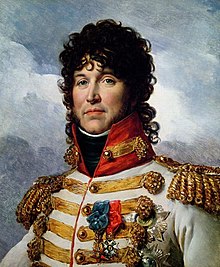
The Strada Nuova, as Scott mentions in his journal entry of December 26, 1831, was built during the reign of Napoleon’s former Marshal, Joachim Murat, who married Napoleon’s sister Caroline, and became King of Naples in 1808.  His reign lasted until 1815.

Sunday, December 25, 2011

A Call for Gratitude

Christmas is a day to give thanks, and December 25th, 1825 finds Scott in a thankful - and work-full - mood.  From his journal (which also ties in to a post from 12/23):
Abbotsford, December 25 [1825].—Arrived here last night at seven. Our halls are silent compared to last year, but let us be thankful—when we think how near the chance appeared but a week since that these halls would have been ours no longer. Barbarus has segetes? Nullum numen abest, si sit prudentia. There shall be no lack of wisdom. But come—il faut cultiver notre jardin. Let us see: I will write out the "Bonnets of Bonnie Dundee"; I will sketch a preface to La Rochejacquelin for Constable's Miscellany, and try about a specimen of notes for the W[averley Novels]. Together with letters and by-business, it will be a good day's work.
"I make a vow,And keep it true."
I will accept no invitation for dinner, save one to Newton-Don, and Mertoun to-morrow, instead of Christmas Day. On this day of general devotion I have a particular call for gratitude!!

Saturday, December 24, 2011

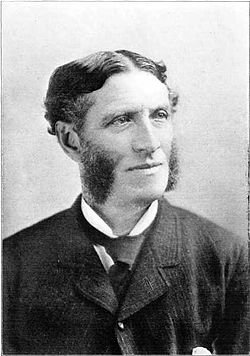
Matthew Arnold


‘He was, indeed, in this canto[the last of Marmion],  at his best; and when “Scott’s poetry is at its best”, says Matthew Arnold, “it is undoubtedly very good indeed.”…Matthew Arnold quotes these verses: 

Turnstall lies dead upon the field,
His life blood stains the spotless shield:
Edmund is down: - my life is reft;
The admiral alone is left.
Let Stanley charge with spur of fire;
With Chester charge, and Lancashire,
Full upon Scotland’s central host,
Or victory, and England’s lost.

And then adds, “That is, no doubt, as vigorous as possible.  As spirited as possible; it is exceedingly fine poetry.”  And there is much hardly less good…’ 

The statements above come from Charles Eliot Norton’s introduction to “The Complete Poetical Works of Sir Walter Scott.   Poet Matthew Arnold was born on December 24, 1822.

Friday, December 23, 2011

Battle of Savenay

‘Mademoiselle Mamet saw the points come near her, but she was not wounded.  After that, she dressed herself like a Bretonne; and this worthy man, whose name was Laurent Cochard, consented to keep her.  She passed the winter at his house, in the parish of La Chapelle, and from time to time came to see us.  She was little and young, and like a child, which made her less liable to suspicion.  Some days afterwards, another woman of my mother, Mademoiselle Carria, left at Savenay, found also a means of joining us.  She had, when the defeat became total, fled on horseback at full speed, without knowing where she was going to.  She heard people killing behind her; and after having miraculously passed through some villages, she got to the houses of peasants who were royalists, and concealed her.  Little by little she drew nearer, and had found us out.

She gave us some details of that unfortunate battle of Savenay, of which she had been witness, and which completed the ruin of our army. ..At the point of day, the republicans attacked, and the battle began furiously.  M. de Marigny, at the head of the bravest, precipitated himself three times on the blues, holding my standard, and shedding tears of rage.  M. de Marigny saw that all was over.  “Women” cried he, “all is lost! save yourselves!”.  He stopped his cannon in the little wood near Savenay, and there began a second battle, which gave the fugitives time to escape…’ 

The text above comes from “Memoirs of the Marchioness of Larochejaquelein”, and provides a firsthand account of the Battle of Savenay (December 23, 1793).  In addition to Bernard de Marigny, who is mentioned above, Henri de la Rochejaquelein was a Royalist general in this battle; one who had successfully led several battles against the Revolutionary Army.  Savenay ended differently, and decisively turned the tide in favor of the revolution.


Sir Walter Scott wrote a preface for the memoirs for Archibald Constable's "Miscellany".  Scott’s preface begins:

‘The civil war of La Vendee forms one of the most interesting events of the Revolution in France.  It was little known in this country while it was raging, and there is much room for censuring the ministers of Britain, who did not avail themselves of the opportunities which it afforded, of obtaining the most important advantages for the allied cause.  We knew, indeed, generally in England, that the Royalists had a force in part of Poitou, and that they had several reencounters with the Republicans, which had terminated to their advantage.  But few English, if any, were fully aware, that while every other province in France submitted more or less patiently to the dominion of Robespierre and his associates, La Vendee, a province hardly known, to us by name, had on foot large armies which fought pitched battles, - gained decisive victories, - took fortified towns, and more than once might, with a moderate degree of assistance from troops and  money, have perhaps ended the Revolution by a march to Paris…’
Thursday, December 22, 2011

George Eliot

‘…At all events, she is greatly inferior to Scott in play and richness of pictorial imagination, in rapidity of movement, and in warmth of colour.  “Romola”, her one historical romance – though it is full of subtlety of conception, contains some very striking figures, and is painted with a surprising minuteness of realistic detail – is a doubtful success.  Sir Walter Scott never failed in making the chief historical figure of his historical romances the most interesting in his group…’

The text above comes from Chambers’s Cyclopedia of English Literature, in a passage on George Eliot.  Chambers seems to prefer Scott, though three of Eliot’s novels are extremely well known (“The Mill on the Floss”, “Silas Marner”, “Middlemarch”).  The English author George Eliot (Mary Anne Evans) died on December 22, 1880.

Wednesday, December 21, 2011

Bernard de Montfaucon

The Benedictine monk and antiquary Bernard de Montfaucon passed on December 21, 1741.  Montfaucon lived nearly 86 years, joining the Benedictines at about 20 years of age, after having served briefly in the French army.  His fame derives from various scholarly works he published, including an authoritative history of Greek writing, and by 1724, his 15 volume “L'antiquité expliquée et représentée en figures”This work was translated into English as “Antiquity Explained and Represented in Diagrams”

In 1824, Walter Scott received a copy of Montfaucon's Antiquities for his library.  As John Gibson Lockhart says, in his “Memoirs of the Life of Sir Walter Scott”,  Such arrivals as that of “the Wallace Chair” were frequent throughout 1824. It was a happy, and therefore it need hardly be added an ineventful year—his last year of undisturbed prosperity. The little incidents that diversified his domestic interior, and the zeal which he always kept up for all the concerns of his friends, together with a few indications of his opinions on subjects of literary and political interest, will be found in his correspondence, which will hardly require any editorial explanations. Within, I think, the same week in January, arrived a copy of Montfauçon’s Antiquities, in fifteen volumes folio, richly bound in scarlet, the gift of King George IV…’

Tuesday, December 20, 2011

Lion Snared


‘Leopold, Grand Duke of Austria, was the first possessor of that noble country to whom the princely rank belonged. He had been raised to the ducal sway in the German Empire on account of his near relationship to the Emperor, Henry the Stern, and held under his government the finest provinces which are watered by the Danube. His character has been stained in history on account of one action of violence and perfidy, which arose out of these very transactions in the Holy Land; and yet the shame of having made Richard a prisoner when he returned through his dominions; unattended and in disguise, was not one which flowed from Leopold's natural disposition. He was rather a weak and a vain than an ambitious or tyrannical prince. His mental powers resembled the qualities of his person. He was tall, strong, and handsome, with a complexion in which red and white were strongly contrasted, and had long flowing locks of fair hair. But there was an awkwardness in his gait which seemed as if his size was not animated by energy sufficient to put in motion such a mass; and in the same manner, wearing the richest dresses, it always seemed as if they became him not. As a prince, he appeared too little familiar with his own dignity; and being often at a loss how to assert his authority when the occasion demanded it, he frequently thought himself obliged to recover, by acts and expressions of ill-timed violence, the ground which might have been easily and gracefully maintained by a little more presence of mind in the beginning of the controversy…’

On December 20th, 1192, Austrian Duke Leopold V captured Richard I of England, the Lionheart, as he was passing through Austria.  Walter Scott covers the scene in “The Talisman”, which is set around the Third Crusade, which both Richard and Leopold fought in, and which Richard and the Sultan Saladin ended, through a treaty signed in September (2nd) of 1192.