Showing posts with label December 24. Show all posts

Saturday, December 24, 2011

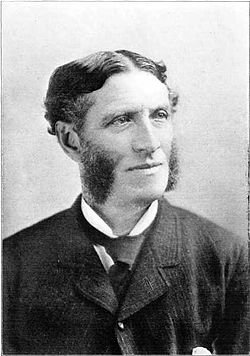
Matthew Arnold


‘He was, indeed, in this canto[the last of Marmion],  at his best; and when “Scott’s poetry is at its best”, says Matthew Arnold, “it is undoubtedly very good indeed.”…Matthew Arnold quotes these verses: 

Turnstall lies dead upon the field,
His life blood stains the spotless shield:
Edmund is down: - my life is reft;
The admiral alone is left.
Let Stanley charge with spur of fire;
With Chester charge, and Lancashire,
Full upon Scotland’s central host,
Or victory, and England’s lost.

And then adds, “That is, no doubt, as vigorous as possible.  As spirited as possible; it is exceedingly fine poetry.”  And there is much hardly less good…’ 

The statements above come from Charles Eliot Norton’s introduction to “The Complete Poetical Works of Sir Walter Scott.   Poet Matthew Arnold was born on December 24, 1822.

Friday, December 24, 2010

George Crabbe

English poet George Crabbe was born this day, December 24th, in the year 1754.  Nearly 17 years Walter Scott's senior, he died just seven months before Scott (in February1832).  In addition to his work as a poet, Crabbe served as a priest for the Duke of Rutland, living at Belvoir Castle.

Crabbe's most famous poems, The Village and The Borough, focus on village life.  Crabbe developed a friendship with Scott due to his poetry.  It was Scott who initiated contact, as related in Rene Louis Huchon's "George Crabbe and his Times, 1754 - 1832; a critical and biographical study":

'In this comparatively sedentary life, the year 1822 is marked by an event of some importance—a journey to Edinburgh. A correspondence had arisen in 1812 between Crabbe and Sir Walter Scott. The latter, hearing that the Tales in Verse were about to be Published, had bespoken a copy at Hatchard's, and had afterwards intimated his entire satisfaction with the work in a highly eulogistic letter addressed to the publisher. Hatchard hastened to send it to Crabbe, who at once expressed his deep gratitude to the writer. " I have," he says, " long entertained a hearty wish to be made known to a poet whose works are so greatly and so universally admired. I continued to hope that I might at some time find a common friend, by whose intervention I might obtain that honour; but I am confined by duties near my home and by sickness in it. . . . Excuse me then, Sir, if I gladly seize this opportunity which now occurs to express my thanks for the politeness of your expressions, as well as my desire of being known to a gentleman who has delighted and affected me, and moved all the passions and feelings in turn, I believe—envy surely excepted. ... I truly rejoice in your success, and while I am entertaining, in my way, a certain set of readers, for the most part probably of peculiar turn and habit, I can with pleasure see the effect you produce on all." Scott replied by return of post with marked cordiality. He fully snared Crabbe's wish. " It is more than twenty years ago," he added, " that I was, for great part of a very snowy winter, the inhabitant of an old house in the country, in a course of poetical study, so very like that of your admirably painted ' Young Lad,' that I could hardly help saying, ' That's me!'"' And Scott, being unable to procure the poems themselves, had learnt by heart all the extracts from them given by The Annual Register—the conclusion of the first book of The Village, and the satire on the romantic novels in The Library: " You may therefore guess my sincere delight when I saw your poems at a later period assume the rank in the public consideration which they so well deserve. It was a triumph to my own immature taste to find I had anticipated the applause of the learned and the critical."...'

Thursday, December 24, 2009

Christmas Eve

From Scott's Marmion (1808):

On Christmas Eve the bells were rung;
On Christmas Eve the mass was sung;
That only night, in all the year,
Saw the stoled priest the chalice rear.
The damsel donned her kirtle sheen;
The hall was dressed with holly green;
Forth to the wood did merry-men go,
To gather in the mistletoe.
Then opened wide the baron's hall
To vassal, tenant, serf, and all;
Power laid his rod of rule aside,
And Ceremony doffed his pride.
The heir, with roses in his shoes,
That night might village partner choose.
The lord, underogating, share
The vulgar game of ' post and pair.

All hailed, with uncontrolled delight,
And general voice, the happy night,
That to the cottage, as the crown,
Brought tidings of salvation down!

The fire, with well-dried logs supplied,
Went roaring up the chimney wide;
The huge hall-table's oaken face,
Scrubbed till it shone, the day to grace,
Bore then upon its massive board
No mark to part the squire and lord.
Then was brought in the lusty brawn,
By old blue-coated serving-man;
Then the grim boar's-head frowned on high,
Crested with bays and rosemary.
Well can the green-garbed ranger tell,
How, when, and where the monster fell
What dogs before his death he tore,
And all the baiting of the boar.
The wassail round in good brown bowls,
Garnished with ribbons, blithely trowls.
There the huge sirloin reeked: hard by
Plum-porridge stood, and Christmas-eye;
Nor failed old Scotland to produce,
At such high-tide, her savoury goose.
Then came the merry masquers in,
And carols roared with blithesome din
If unmelodious was the song,
It was a hearty note, and strong.
Who lists may in their mumming see
Traces of ancient mystery;
White shirts supplied the masquerade,
And smutted cheeks the visors made;
But, oh! what masquers, richly dight,
Can boast of bosoms half so light!
England was merry England, when
Old Christmas brought his sports again.
'Twas Christmas broached the mightiest ale;
'Twas Christmas told the merriest tale
A Christmas gambol oft could cheer
The poor man's heart through half the year.'