Showing posts with label December 26. Show all posts

Monday, December 26, 2011

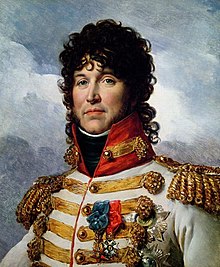
Murat's Road


December 26, [Strada Nuova].—Went ashore; admitted to pratique, and were received here. Walter has some money left, which we must use or try a begging-box, for I see no other resource, since they seem to have abandoned me so. Go ashore each day to sight-seeing. Have the pleasure to meet Mr. and Mrs. Laing-Meason of Lindertis, and have their advice and assistance and company in our wanderings almost every day. Mr. Meason has made some valuable remarks on the lava where the villas of the middle ages are founded: the lava shows at least upon the ancient maritime villas of the Romans; so the boot of the moderns galls the kibe of the age preceding them; the reason seems to be the very great durability with which the Romans finished their domestic architecture of maritime arches, by which they admitted the sea into their lower houses.
We were run away with, into the grotto very nearly, but luckily stopped before we entered, and so saved our lives. We have seen the Strada Nuova—a new access of extreme beauty which the Italians owe to Murat.


The Bay of Naples is one of the finest things I ever saw. Vesuvius controls it on the opposite side of the town.

The Strada Nuova, as Scott mentions in his journal entry of December 26, 1831, was built during the reign of Napoleon’s former Marshal, Joachim Murat, who married Napoleon’s sister Caroline, and became King of Naples in 1808.  His reign lasted until 1815.

Sunday, December 26, 2010

Battle of Pultusk

On December 26, 1806, the Battle of Pultusk took place.  Russian troops under German general Levin Bennigsen defeated Napoleon Bonaparte's forces, which were under the command of Marshal Jean Lannes.  Sir Walter Scott covered this battle in his "The Life of Napoleon Buonaparte":

'On the 25th of November, the Russian army of Bennigsen, closely concentrated, occupied a position behind Pultusk ; their left, commanded by Count Ostreman, resting upon the town, which is situated on tha river Narew. A corps occupied the bridge, to prevent any attack from that point. The right, under Barclay de Tolly, was strongly posted in a wood, and the centre was under the orders of General Zachen. A considerable plain extended between the town of Pultusk and the wood, which formed the right of the Russian position. They had stationed a powerful advanced guard, had occupied the plain with their cavalry, and established a strong reserve in their rear. On the 26th, the Russian position was attacked by the French divisions of Lannes and Davoust, together with the French guards. After skirmishing some time in the centre, without making the desired impression, the battle appeared doubtful, when, suddenly assembling a great strength on their own left, the French made a decisive effort to overwhelm the Russians, by turning their right wing. The attack prevailed to a certain extent. The accumulated and superior weight of fire, determined Barclay de Tolly to retreat on his reserves, which he did without confusion, while the French seized upon the wood, and took several Russian guns. But Bennigsen, in spite of Kaminskoy's order to retreat, was determined to abide the brunt of battle, and to avail himself of the rugged intrepidity of the troops which he commanded. Ordering Barclay de Tolly to continue his retreat, and thus throwing back his right wing, he enticed the French, confident in victory, to pursue their success, until the Russian cavalry , which had covered the manoeuvre, suddenly withdrawing, they found themselves under a murderous and welldirected fire from one hundred and twenty guns, which, extending along the Russian front, played on the French advancing columns with the utmost success. The Russian line at the same time advanced in turn, and pushing the enemy before them, recovered the ground from which they had been driven. The approach of night ended the combat, which had been both obstinate and bloody. The French lost near eight thousand men, killed and wounded, including General Lannes and five other general officers among the latter. The Russian loss amounted to five thousand. The French retreated after nightfall with such rapidity, that on the next day the Cossacks could not find a rear-guard in the vicinity of Pultusk...'

Saturday, December 26, 2009

Saint Stephen's Day

Saint Stephen's Day is the first day after the celebration of Christ's birth, in honor of Saint Stephen having been the first of Jesus' followers to become martyred.  Stephen was stoned to death.

On Stephen's Day, on old and no longer practiced tradition involved the letting of horses blood.  The thinking was that this would protect the horses against sickness in the coming year.

More from Marmion:

"...Then followeth Saint Stephen’s Day, whereon doth every roan
His horses jaunt and course abroad, as swiftly as he can.
Until they do extremely sweat, and then they let them blood,
For this being (lone upon this day, they say doth do them good,
And keeps them from all maladies and sickness through the year,
As if that Stephen any time took charge of horses here...."