Showing posts with label June 21. Show all posts

Thursday, June 21, 2012

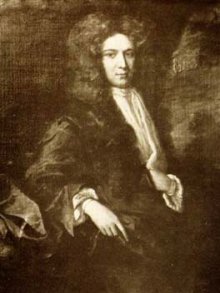
Freethinking Anthony Collins


Sir Walter Scott knew something about Jonathan Swift, having written a bio on the author, and adding notes to “The Works of Jonathan Swift”, published in 1883 by Bickers & Son.  Swift knew something about today’s subject, philosopher Anthony Collins, who was born on June 21, 1676.  Swift’s Works includes a discussion of Collins’ “Discourse of Free Thinking”.  Swift's intro, below, gives a flavor of Swift’s analysis, and Collins' thinking.


MR. COLLINS'S DISCOURSE
OF
FREETHINKING;
PUT INTO PLAIN ENGLISH,
BY WAY OF ABSTRACT,
FOR THE USE OF THE POOR.
BY A FRIEND OF THE AUTHOR.
FIRST PRINTED IN 1713.

Anthony Collins, the celebrated Deist, who, notwithstanding his sceptical opinions, retained the friendship of Locke, published, in 1713, his "Discourse of Freethinking, occasioned by the Rise and Growth of a Sect called Freethinkers." It is believed to have been printed at the Hague, though the title-page bears London. Like Tindal, Collins pretended only to assail the encroachments of the Pagan and of the Romish priesthood, while his real drift was to undervalue and bring to contempt the established clergy of all countries and ages, to ridicule the Mosaical law, to weaken the evidences of revealed religion, and even to controvert, by insinuation at least, the doctrine of the immortality of the soul. The treatise attracted much notice, and drew forth an host of answerers, among whom Whiston, Hare, Hoadley, and Bentley, were most conspicuous.
Swift also mingled in the controversy, yet rather with a political than a religious view. For, although the politics of the learned men and divines above-mentioned were opposite to his own, he has not hesitated, in his ironical defence of Collins, to assume the character of a Whig, as if to identify the deistical opinions of that author with those of the opponents of the Tory ministry. What gave a colour, though only a colour, to this charge was, that Toland, Tindal, Collins, and most of those who carried to licence their abhorrence of church-government, were naturally enough enrolled among that party in politics who professed most attachment to freedom of sentiment; and in this, as in many other cases, the vices, or scandalous opinions, of a small part of a political body, were unjustly held up as its general characteristics. Swift himself had reason loudly to complain of similar treatment in the succeeding reign, when, because the Jacobites were the enemies of government, all who opposed the ministry were called Jacobites. Laying aside consideration of this ungenerous advantage, the treatise is in itself most admirable…

Monday, June 20, 2011

John Skelton

Walter Scott shares at least one thing in common with today's subject - John Skelton.  Both were offered the Poet Laureateship.  Scott refused, recommending Robert Southey, who became Poet Laureate in 1813.  Skelton became Poet Laureate in 1513 or 1514.  Skelton tutored the future Henry VIII while he was a prince, becoming Poet Laureate during his reign.  Skelton managed to keep his head, dying on June 21, 1529, at nearly 70 years of age.

Skelton wrote sometimes of women who inspired him, including the mother of Jane Seymour:


To Mistress Margery Wentworth

WITH margerain gentle,
The flower of goodlihead,
Embroidered the mantle
Is of your maidenhead.
Plainly I cannot glose;
Ye be, as I divine,
The pretty primrose,
The goodly columbine.

Benign, courteous, and meek,
With wordes well devised;
In you, who list to seek,
Be virtues well comprised.
With margerain gentle,
The flower of goodlihead,
Embroidered the mantle
Is of your maidenhead.


Monday, June 21, 2010

Freits (i.e. omens) follow those that look to them

Mungo Park was a Scottish explorer who is credited with being the first westerner to see the source of the Niger River.  Born within a month of Walter Scott (on September 11, 1771), he reached the source of the Niger on June 21, 1796.

Park's route to Africa did not follow a prescribed plan, perhaps validating the phrase in today's title line, with which he left Walter Scott before his return to Africa in 1805. He apprenticed as a surgeon between 1786 and 1789, then moved to Edinburgh to take classes.  He found an interest in botany.

Park subsequently moved to London, and through Sir Joseph Banks, a contact of his brother-in-law's, received a position as an assistant surgeon.  He also made several discoveries in botany at this time.  Ultimately, his observations led to an invitation from the Association for the Promotion of Discovery to join an expedition to trace the Niger.  Once again, Sir Joseph Banks played a role in his next opportunity, by promoting him for the expedition.

Through a series of difficult and ill-fated actions, Park ultimately found the source of the Niger.  Park had been given up for dead when he returned to London in December 1797 and told his tale.  Park's life turned more domestic at this point, during which he married, settled in Peebles as a doctor, and in 1804, met Walter Scott, who was then living at Ashestiel.

Park apparently withheld a substantial number of incidents that had occurred during his time in Africa.  Mostly, he considered them so fantastic as to be incredulous to the British public.  Scott was of course intrigued by these, and gleaned some accounts from Park as their friendship grew.  Park is said to have been fond of poetry as well.  Park made an impact on Scott in the two years or so they knew each other.  Park left on a new African expedition in 1806, never to return.

Scott remembers Park in one of his journal entries (October 26, 1831): ...About one o'clock our Kofle, as Mungo Park words it, set out, self excluded, to witness the fleet sailing from the ramparts.

Scott was consulted for the publication of Park's journal, and wrote a letter to J. Whishaw who edited this work:

DEAR SIR,-I am glad the anecdotes I rememberd

concerning my poor friend M[r]. Park seemd to you in
the slightest degree interesting. I have often endeavourd
to recollect the passages you mention but they were
communicated near the close of an evening of conviviality
& although I am positively certain of the scope of the
conversation I cannot at this distance of time rely on my
memory as to the particular narrative which led to it. Two
trifling circumstances occur to me respecting his habits.
The first-that his practise as a surgeon among our
lonely hills was so far from being profitable that it was
really expensive. I have known more cases than one in
which Mungo after riding five or six miles by night among
pathless hills gave his medicines as well as attendance for
nothing instead of taking the miserable half guinea from
some poor shepherd or his wife.
2d. Notwithstanding his determination again to visit
Africa the terrors of his former captivity had not ceased
to impress his imagination. When he was affected with
indigestion or any other stomach complaint he used to
start from his sleep supposing himself still a prisoner in
the tent of All.
I shall never forget the spot & the morning when I last
parted with this firm sagacious and intrepid character.
He had slept at my house at Ashestiel & in the morning
we rode together over the wild chain of pastoral hills
which divide Tweed from Yarrow. On the road he told
me his purpose of going straight from Edinr. without again
returning to take leave of his family. We were then at
the top of Williamhope-ridge & the mist floating dimly
below us down the vale of the Yarrow seemd an emblem
of the-dark & uncertain prospect before him. I remember
pressing upon him the dangers of his journey with a
military force which I then thought (though falsely as you
have shewn) the most unsafe mode of travelling since it
was inadequate for conquest & yet large enough to excite
suspicion. He refuted my objections by referring to the
subdivision of Africa into petty districts the chiefs of
whom were not likely to form any regular combination
for cutting him off & whose boundaries were soon
traversed. He referd also to their habit of seeing cofles
or caravans of all nations pass through their territories on
paying a small duty so that the march of such a party
as his own had nothing in it to alarm them with ideas of
spoil or invasion. In this sort of discourse we passd the
hills & came to a road where our paths separated-a
small ditch divided the road from the moor & in going
over it Mungo Parks horse stumbled & nearly fell. As
he recoverd him I said " thats a bad omen Mungo " to
which he answerd laughing " freits [i.e. omens] follow
those that look to them." With this proverbial
expression we parted never again to meet on this side of
the grave.
I observe that you are puzzled with the word fuff 1
which he applies to the noise of the lion[e]ss. It is a very
expressive Scottish word applicable in its primitive sense
to the explosive noise which a cat makes in flying at
a dog.
You observe with great truth that Park was rather shy
& reserved in his general habits. In addition to this I
may add that he always felt rather embarassd by indirect
inquiries which strangers to avoid the apparent rudeness
of blunt interrogation often made concerning his travels.
But said he ther[e] are two risques from this false delicacy
either that I may not understand their question or that
they may misconstrue my answer & in either case my
conversation will be reported inaccurately. He contrasted
this with the conduct of the venerable Professor
Fergusson 2 who using the privilege to which his high
talents & advanced age so well entitled him spread the
map of Africa before Park the first day he dined at
Hallyards made the traveller trace out his whole journey
inch by inch & questiond him upon the whole as he went
along with characteristick precision.
These things are scarce worth writing or reading. But
I have a peculiar veneration for the memory of my
unfortunate friend and even trifles connected with that
topick have a peculiar claim to my remembrance. If you
can extract any thing out of these trifles for your second
edition they are much at your service 1 & I am with much
respect Dear Sir Your obliged humble Servt
WALTER SCOTT


PICCADILLY 24 April [1815]


[Nat. Lib. Scot.]

Sources:
http://www.electricscotland.com/history/other/park_mungo.htm
http://www.nndb.com/people/574/000096286/
http://www.walterscott.lib.ed.ac.uk/etexts/etexts/letters4.PDF