Showing posts with label Jonathan Swift. Show all posts

Thursday, June 21, 2012

Freethinking Anthony Collins


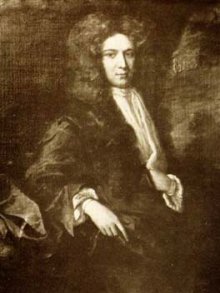
Sir Walter Scott knew something about Jonathan Swift, having written a bio on the author, and adding notes to “The Works of Jonathan Swift”, published in 1883 by Bickers & Son.  Swift knew something about today’s subject, philosopher Anthony Collins, who was born on June 21, 1676.  Swift’s Works includes a discussion of Collins’ “Discourse of Free Thinking”.  Swift's intro, below, gives a flavor of Swift’s analysis, and Collins' thinking.


MR. COLLINS'S DISCOURSE
OF
FREETHINKING;
PUT INTO PLAIN ENGLISH,
BY WAY OF ABSTRACT,
FOR THE USE OF THE POOR.
BY A FRIEND OF THE AUTHOR.
FIRST PRINTED IN 1713.

Anthony Collins, the celebrated Deist, who, notwithstanding his sceptical opinions, retained the friendship of Locke, published, in 1713, his "Discourse of Freethinking, occasioned by the Rise and Growth of a Sect called Freethinkers." It is believed to have been printed at the Hague, though the title-page bears London. Like Tindal, Collins pretended only to assail the encroachments of the Pagan and of the Romish priesthood, while his real drift was to undervalue and bring to contempt the established clergy of all countries and ages, to ridicule the Mosaical law, to weaken the evidences of revealed religion, and even to controvert, by insinuation at least, the doctrine of the immortality of the soul. The treatise attracted much notice, and drew forth an host of answerers, among whom Whiston, Hare, Hoadley, and Bentley, were most conspicuous.
Swift also mingled in the controversy, yet rather with a political than a religious view. For, although the politics of the learned men and divines above-mentioned were opposite to his own, he has not hesitated, in his ironical defence of Collins, to assume the character of a Whig, as if to identify the deistical opinions of that author with those of the opponents of the Tory ministry. What gave a colour, though only a colour, to this charge was, that Toland, Tindal, Collins, and most of those who carried to licence their abhorrence of church-government, were naturally enough enrolled among that party in politics who professed most attachment to freedom of sentiment; and in this, as in many other cases, the vices, or scandalous opinions, of a small part of a political body, were unjustly held up as its general characteristics. Swift himself had reason loudly to complain of similar treatment in the succeeding reign, when, because the Jacobites were the enemies of government, all who opposed the ministry were called Jacobites. Laying aside consideration of this ungenerous advantage, the treatise is in itself most admirable…

Tuesday, November 30, 2010

Jonathan Swift

The satirist Jonathan Swift was born this day, November 30, in the year 1667.  Swift was born in Dublin, and educated at Kilkenny College.  As his father, also Jonathan, had died during his wife's pregnancy, Jonathan was supported in his education by a relative of his father.  Jonathan's uncle, Dryden William Swift (the family was related to poet John Dryden), took on this responsibility.  Jonathan later furthered his study at Dublin University, earning a Doctor of Divinity degree. 

Swift is best known for his novel "Gulliver's Travels".  Sir Walter Scott edited a 19 volume set of "The Works of Jonathan Swift", which Archibald Constable published.  Scott included his own notes and a life of Swift.  Here is a portion of Scott's Life of Swift, as taken from "The Miscellaneous Prose Works of Sir Walter Scott...":

'The life of Swift forms an interesting and instructive narrative to all who love to contemplate those alternations of good and evil which chequer the fate of individuals, distinguished by their talents and by their fame. Born under circumstances of the most pressing calamity, educated by the cold and careless charity of relations, denied the usual honours attached to academical study, and spending years of dependence upon the inefficient patronage of Sir William Temple, the earlier part of his history may be considered as a continued tale of depressed genius and disappointed hopes. Yet, under all these disadvantages, Swift arose to be the counsellor of a British administration, the best defender of their measures, and the intimate friend of all who were noble or renowned, learned or witty, in the classic age of Queen Anne. The events of his latter years were not less strongly contrasted. Involved in the fall of his patrons, he became a discontented and persecuted exile from England, and from his friends, yet, almost at once, attained a pitch of popularity which rendered him the idol of Ireland, and the dread of those who ruled that kingdom. Nor was his domestic fate less extraordinary—loving, and beloved by two of the most beautiful and interesting women of the time, he was doomed to form a happy and tranquil union with neither, and saw them sink successively to the grave, under the consciousness that their mortal disease had its source in disappointed hopes, and ill-re.quited affection. His talents also, the source of his fame and his pride, whose brilliancy had so long dazzled and delighted mankind, became gradually clouded by disease, and perverted by passion, as their possessor approached the goal of life; and, ere he. attained it, were levelled far below those of ordinary humanity. From the life of Swift, therefore, may be derived the important lesson, that, as no misfortunes should induce genius to despair, no rank of fame, however elevated, should encourage its possessor to presumption. And those to whom fate has denied such brilliant qualities, or to whom she has refused the necessary opportunities of displaying them, may be taught, while perusing the history of this illustrious man, how little happiness depends upon the possession of transcendent genius, of political influence, or of popular renown.


Jonathan Swift, Doctor of Divinity, and Dean of St Patrick's, Dublin, was descended from the younger branch of the family of Swifts, in Yorkshire, which had been settled in that county for many years. His immediate ancestor was the Reverend Thomas Swift, vicar of Goodrich, in Herefordshire, and proprietor of a small estate in that neighbourhood. At the beginning of the civil wars, this gentleman distinguished himself by his zeal and activity in the cause of Charles I.; and his grandson has recorded, in a separate memoir, his exploits and sufferings during the civil wars. To that memoir, and the notes which accompany it, the reader is referred for farther particulars concerning Swift's family. After having been repeatedly plundered by the parliamentary soldiers, even to the clothes of the infant in the cradle, (which, according to family tradition, was Jonathan, father of the Dean,) and to the last loaf which was to support his numerous family, Thomas Swift died in the year 1658, leaving ten sons, and three or four daughters, with no other fortune than the small estate to which he was born, and that almost ruined by fines and sequestrations. The sufferings of this gentleman were of some service to his family after the Restoration; for Godwin Swift, his eldest son, who had studied at Gray's Inn, and had been called to the bar, was appointed Attorney-general of the Palatinate of Tipperary, under the Duke of Ormond. He was a man of talents, and appears to have possessed a considerable revenue, which he greatly embarrassed by embarking in speculative and expensive projects, to which his nephew, Jonathan, ever after entertained an unconquerable aversion. Meantime, however, the success of Godwin Swift, in his profession, attracted to Ireland three of his brethren, William, Jonathan, and Adam, all of whom settled in that kingdom, and there lived and died.
 
Jonathan Swift, the father of the celebrated author, was the sixth or seventh son of the Vicar of Goodrich, the number of whose descendants, and the obscurity of their fortunes, does not admit of distinguishing his lineage more accurately. Jonathan, like his brother Godwin, appears to have been bred to the law, though not like him called to the bar. He added to the embarrassments of his situation, by marrying Abigail Ericke of Leicestershire, a lady whose ancient genealogy was her principal dowry. The Dean has, himself, informed us, that his father obtained some agencies and employments in Ireland; but his principal promotion seems to have been the office of steward to' the society of the King's Inns, Dublin, to which he was nominated in 1665.


This situation he did not long enjoy, for he died in 1667, two years after his appointment, leaving an infant daughter, and his widow, then pregnant [with Jonathan], in a very destitute situation, as Mrs Swift was unable, without the assistance of the society, even to defray the expense of her husband's funeral...'

Thursday, April 29, 2010

John Bull

A KEY TO THE LOCK.


"...Since this unhappy division of our nation into parties, it is not to be imagined how many artifices have been made use of by writers to obscure the truth, and cover designs which may be detrimental to the public. In particular, it has been their custom of late to vent their political spleen in allegory and fable. If an honest believing nation is to be made a jest of, we have a story of " John Bull and his wife:" if a treasurer is to be glanced at, an ant with a white straw is introduced; if a treaty of commerce is to be ridiculed, it is immediately metamorphosed into a tale of « Count Tariff."*

* Arbuthnot's History of John Bull is quoted on the one side, and on the other, a paper of Steele's Guardian, in which some political insinuations are couched, under the allegory of a colony of ants. The satire, entitled The Trial of Count Tariff, was written in ridicule of the commercial treaty .with France..."

From The Works of Jonathan Swift, D.D
With Notes and a Life of the Author by Sir Walter Scott

John Arbuthnot seems to have been something of a renaissance man, contributing in several different fields of knowledge; math, medicine, writing.  He was born on April 29, 1667.  Arbuthnot and Jonathan Swift became close after Swift moved to London, in 1710.  The two formed "The Brothers' Club" where they discussed ideas for a publication called the "Tory".

Arbuthnot created the character John Bull, in 1712, to satirize the war between England and France.  John Bull grew to represent the prototypical Englishman.  Bull had a sister Peg, which represented Scotland.