Showing posts with label March 21. Show all posts

Wednesday, March 21, 2012

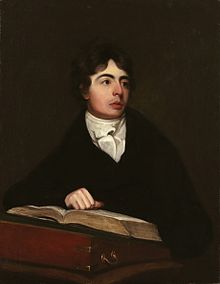
Robert Southey


‘On my return here, I found, to my no small surprise, a letter tendering to me the laurel vacant by the death of the poetical Pye. I have declined the appointment.... Will you forgive me, my friend, if I own I had you in my recollection? I have given Croker the hint, and otherwise endeavored to throw the office into your option. I am uncertain if you will like it, for the laurel has certainly been tarnished by some of its wearers, and, as at present managed, its duties are inconvenient and somewhat liable to ridicule. But the latter might be amended, as I think the Regent's good sense would lead him to lay aside these regular commemorations; and as to the former point, it has been worn by Dryden of old, and by Warton in modern days.’

The text above comes from a letter Walter Scott wrote to Robert Southey (September 4, 1813). Scott recommended Southey for the honor of Poet Laureate for Britain.  Southey held the post form 1813 to 1843.  Robert Southey died on March 21st, 1843.

Monday, March 21, 2011

Feast of Saint Benedict

The feast of Saint Benedict of Nursia occurs on March 21st, which is believed to be the day of his death, in 547AD.  Benedict's name is remembered in the Benedictine Order, which Walter Scott includes in his poem "Marmion".

XIX.


There, met to doom in secrecy,
Were placed the heads of convents three:
All servants of Saint Benedict,
The statutes of whose order strict
On iron table lay;
In long black dress, on seats of stone,
Behind were these three judges shown
By the pale cresset's ray:
The Abbess of Saint Hilda's, there,
Sat for a space with visage bare,
Until, to hide her bosom's swell,
And tear-drops that for pity fell,
She closely drew her veil:
Von shrouded figure, as I guess,
By her proud mien and flowing dress,
Is Tynemouth's haughty Prioress,
And she with awe looks pale:
And he, that Ancient Man, whose sight
Has long been quenched by age's night,
Upon whose wrinkled brow alone,
Nor ruth, nor mercy's trace is shown,
Whose look is hard and stern,—
Saint Cuthbert's Abbot is his style;
For sanctity call'd, through the isle,
The Saint of Lindisfarne.

Sunday, March 21, 2010

The People's MP

"March 21 (1826).—Perused an attack on myself, done with as much ability as truth, by no less a man than Joseph Hume, the night-work man of the House of Commons, who lives upon petty abuses, and is a very useful man by so doing. He has had the kindness to say that I am interested in keeping up the taxes; I wish I had anything else to do with them than to pay them. But he lies, and is an ass, and not worth a man's thinking about. Joseph Hume, indeed!—I say Joseph Hum,—and could add a Swiftian rhyme, but forbear."

- From Scott's Journal.

According to Sir Robert Peel, Hume was "one of the most useful members to sit in the House of Commons".  He was known for challenging every expenditure in the budget.  Hume was in favor of free trade, and opposed to the Corn Laws.  His nickname as the People's MP had to do partly with his efforts against "combination laws" that favored masters, and hindered laborers.  William Wordsworth and Charles Lamb would have been attuned to Scott's feelings on the subject of Joseph Hume.  These men saw their pensions severed, due, as Lamb put it, to "the foul enchanter, Joseph Hume".