Showing posts with label Kenilworth. Show all posts

Tuesday, June 26, 2012

Branwell Bronte


Few remember Branwell Bronte, brother of the famous Bronte sisters.  Patrick Branwell, named for his mother’s side of the family, was born on June 26th, 1817.  His life was short - thirty-one years - and marred by addiction to alcohol and possibly laudanum. 


Elizabeth Gaskell, in her biography of Charlotte Bronte, writes of Branwell, that he ‘was rather a handsome boy, with "tawny" hair, to use Miss Bronte's phrase for a more obnoxious colour….’

In the same work Ms. Gaskell highlights the importance of Sir Walter Scott’s work to the Bronte family.

‘…Mr. Bronte encouraged a taste for reading in his girls; and though Miss Branwell kept it in due bounds, by the variety of household occupations, in which she expected them not merely to take a part, but to become proficients, thereby occupying regularly a good portion of every day, they were allowed to get books from the circulating library at Keighley; and many a happy walk, up those long four miles, must they have had, burdened with some new book, into which they peeped as they hurried home. Not that the books were what would generally be called new; in the beginning of 1833, the two friends seem almost simultaneously to have fallen upon Kenilworth, and Charlotte writes as follows about it:--

"I am glad you like Kenilworth; it is certainly more resembling a romance than a novel: in my opinion, one of the most interesting works that ever emanated from the great Sir Walter's pen. Varney is certainly the personification of consummate villainy; and in the delineation of his dark and profoundly artful mind, Scott exhibits a wonderful knowledge of human nature, as well as a surprising skill in embodying his perceptions, so as to enable others to become participators in that knowledge."…’


Saturday, June 16, 2012

Battle of Stoke Field


‘…You have heard of the battle of Stoke, my good host, and perhaps of old Sir Roger Robsart, who, in that battle, valiantly took part with Henry VII, the Queen’s grandfather, and routed the Earl of Lincoln, Lord Geraldin and his wild Irish, and the Flemings whom the Duchess of Burgundy had sent over, in the quarrel of Lambert Simnel?’
‘I remember both one and the other,’ said Giles Gosling, ‘it is sung of a dozen times a week on my alebench below. Sir Roger Robsart of Devon — O, ay, ’t is him of whom minstrels sing to this hour —
He was the flower of Stoke’s red field, When Martin Swart on ground lay slain; In raging rout he never reel’d, But like a rock did firm remain.‘ Ay, and then there was Martin Swart I have heard my grandfather talk of, and of the jolly Alamins whom he commanded, with their slashed doublets and quaint hose, all frounced with ribands above the nether-stocks. Here ’s a song goes of Martin Swart, too, an I had but memory for it:

Martin Swart and his men,
Saddle them, saddle them;
Martin Swart and his men,
Saddle them well.’ ' …’

The Battle of Stoke Field was the end of road for Yorkist pretender to the throne Lambert Simnel, and of Yorkist efforts to take the crown from a Lancastrian, Henry VII of England.  The text above comes from “Kenilworth”.

Monday, April 30, 2012

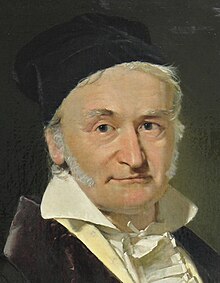
Gauss


‘Gauss knew all the works of Sir Walter Scott very thoroughly and he passionately admired them.  The tragic ending in “Kenilworth” made a painful impression on him and he would have preferred not to read it.  He read Scott’s “Life of Napoleon” with great interest and felt quite satisfied, being in full agreement with the author.  One day he found a passage in Scott which set him to laughing.  It was just too much for an astronomer.  Gauss compared all the editions he could get his hands on to make sure it was not a misprint.  The words were: “The moon rises broad in the northwest”. ..’

We know Carl Gauss more as a mathematician than an astronomer.  Any student of statistics is familiar with his work.  Gauss was apparently very sensitive to sad stories, as the passage from Dunnington, Gray and Dohse’s “Carl Friedrich Gauss: Titan of Science” indicates.  Carl Gauss was born on April 30th, 1777.

WRS

Saturday, March 24, 2012

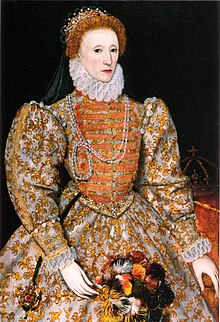
Queen Elizabeth I of England


‘A certain degree of success, real or supposed, in the delineation of
Queen Mary, naturally induced the author to attempt something similar
respecting "her sister and her foe," the celebrated Elizabeth. He
will not, however, pretend to have approached the task with the same
feelings; for the candid Robertson himself confesses having felt the
prejudices with which a Scottishman is tempted to regard the subject;
and what so liberal a historian avows, a poor romance-writer dares not
disown. But he hopes the influence of a prejudice, almost as natural to
him as his native air, will not be found to have greatly affected the
sketch he has attempted of England's Elizabeth. I have endeavoured
to describe her as at once a high-minded sovereign, and a female of
passionate feelings, hesitating betwixt the sense of her rank and
the duty she owed her subjects on the one hand, and on the other her
attachment to a nobleman, who, in external qualifications at least,
amply merited her favour. The interest of the story is thrown upon that
period when the sudden death of the first Countess of Leicester seemed
to open to the ambition of her husband the opportunity of sharing the
crown of his sovereign.’

The text above is from the introduction to Sir Walter Scott’s “Kenilworth”.  The great queen of England lived to nearly 70 (born 1533), but it was a life of heavy responsibility, and she seems to have passed weary of life.  The end came on March 24th, 1603.

Thursday, March 15, 2012

A Day at Deptford

‘15th March, 1652. I saw the Diamond and Ruby launched in the Dock at Deptford, carrying forty-eight brass cannon each; Cromwell and his grandees present, with great acclamations.’

Diarist John Evelyn reports watching the HMS Diamond and HMS Ruby being launched.  The Ruby served longer than the Diamond, being captured in 1707.  The Diamond was captured in 1693.  Both ships were built by Peter Pett at the first Royal Navy dockyard at Deptford. 

Walter Scott includes Deptford dockyard in “Kenilworth”: ‘…"MASTER TRESSILIAN, 
OUR GOOD FRIEND AND COUSIN, "We are at present so ill at ease, and otherwise
so unhappily circumstanced, that we are desirous to have around us those of our friends
 on whose loving-kindness we can most especially repose confidence; amongst whom we
 hold our good Master Tressilian one of the foremost and nearest, both in good will and good
ability. We therefore pray you, with your most convenient speed, to repair to our poor lodging,
at Sayes Court, near Deptford, where we will treat further with you of matters which we deem
it not fit to commit unto writing. And so we bid you heartily farewell, being your loving kinsman
to command…’

Tuesday, January 31, 2012

Cumnor Hall

Cumnor Hall was to have been the original title of what became Walter Scott’s “Kenilworth”, which was published in 1821.  The balled of the same name, by William Julius Mickle, provided inspiration for Scott in taking on this endeavor.  

The dews of summer nighte did falle,
The moone (sweete regente of the skye)
Silver'd the walles of Cumnor Halle,
And manye an oake that grewe therebye....


On January 31st, 1829, we find Scott reading another Cumnor Hall: ‘…Looked over Cumnor Hall by Mr. Usher Tighe of Oxford. I see from the inscription on Tony Foster's tomb that he was a skilful planter, amongst other fashionable accomplishments….’

The book in question is Hugh Usher Tighe’s “An Historical Account of Cumner…”, which reached the public in 1821, the same year “Kenilworth” was published.  Tighe provides useful background on Cumner and Scott’s “Kenilworth” in the introduction to his work. 

‘The deep interest so deservedly felt, and so openly evinced for every production which emanates from the highly gifted “Author of Waverley”, reflects a corresponding interest on every subject connected with a Tale on which the finest feelings of the mind are unavoidably concentrated.  These sentiments, so universally excited by the perusal of this author’s former Tales, can assuredly not have been lessened by his last production of “Kenilworth”, which, perhaps from the circumstances of the case, form the melancholy story of a very young and lovely woman, contending with villainy and treachery, and struggling with the most trying hardships and privations, appeals more closely to the human heart, and is more calculated to excite the warm emotions of pity, than any of his earlier works.  It is on the prevalence of these feelings, that I venture to hope, that some account of Cumner where the scene of this fascinating story is  principally laid, and the narration of the facts, as given by Ashmole in his Antiquities of Berkshire, may not be deemed utterly devoid of interest….I annex the facts of this melancholy story, as related by Ashmole, and which is alluded to in the latter part of “Kenilworth”.  The same narration, in the same words, may be found in Anthony Wood’s MSS in the Ashmoleon collection…’ 

Sunday, August 7, 2011

Robert Dudley


"No, Dudley!" said Elizabeth, raising him with one hand, while she extended the other that he might kiss it. "Elizabeth hath not forgotten that, whilst you were a poor gentleman, despoiled of your hereditary rank, she was as poor a princess, and that in her cause you then ventured all that oppression had left you--your life and honour. Rise, my lord, and let my hand go--rise, and be what you have ever been, the grace of our court and the support of our throne! Your mistress may be forced to chide your misdemeanours, but never without owning your merits.--And so help me God," she added, turning to the audience, who, with various feelings, witnessed this interesting scene--"so help me God, gentlemen, as I think never sovereign had a truer servant than I have in this noble Earl!"

Robert Dudley was born on August 7, 1574.  Not the Robert Dudley featured in Walter Scott’s “Kenilworth”, but his son.  Robert was illegitimate, and was born 14 years after Dudley’s first wife Amy Robsart died.   

The younger Robert ultimately inherited Kenilworth Castle, but not the titles his father held; though he tried, claiming that his mother, Lady Douglas Sheffield had been secretly married to his father.  Dudley made his mark as an explorer and cartographer.