Showing posts with label March 24. Show all posts

Saturday, March 24, 2012

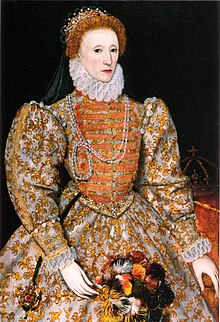
Queen Elizabeth I of England


‘A certain degree of success, real or supposed, in the delineation of
Queen Mary, naturally induced the author to attempt something similar
respecting "her sister and her foe," the celebrated Elizabeth. He
will not, however, pretend to have approached the task with the same
feelings; for the candid Robertson himself confesses having felt the
prejudices with which a Scottishman is tempted to regard the subject;
and what so liberal a historian avows, a poor romance-writer dares not
disown. But he hopes the influence of a prejudice, almost as natural to
him as his native air, will not be found to have greatly affected the
sketch he has attempted of England's Elizabeth. I have endeavoured
to describe her as at once a high-minded sovereign, and a female of
passionate feelings, hesitating betwixt the sense of her rank and
the duty she owed her subjects on the one hand, and on the other her
attachment to a nobleman, who, in external qualifications at least,
amply merited her favour. The interest of the story is thrown upon that
period when the sudden death of the first Countess of Leicester seemed
to open to the ambition of her husband the opportunity of sharing the
crown of his sovereign.’

The text above is from the introduction to Sir Walter Scott’s “Kenilworth”.  The great queen of England lived to nearly 70 (born 1533), but it was a life of heavy responsibility, and she seems to have passed weary of life.  The end came on March 24th, 1603.

Thursday, March 24, 2011

Longitude

English clockmaker John Harrison was born March 24, 1693.  Harrison solved a problem that mariners had faced since the beginning of sea-travel; being able to establish an east-west, or longitudinal position.  Dava Sobel's book on the topic is worth the read.  Sir Walter Scott uses the term longitude to add some color to "The Pirate":

'Amongst others, the little bard, who had now got next to our friend Mordaunt Mertoun, evinced a positive determination to commence and conclude, in all its longitude and latitude, the story of his introduction to glorious John Dryden; and Triptolemus Yellowley, as his spirits arose, shaking off a feeling of involuntary awe, with which he was impressed by the opulence indicated in all he saw around him, as well as by the respect paid to Magnus Troil by the assembled guests, began to broach, to the astonished and somewhat offended Udaller, some of those projects for ameliorating the islands, which he had boasted of to his fellow travellers upon their journey of the morning...'

Wednesday, March 24, 2010

Union of the Crowns

"A fancied moss-trooper, frc.


This was the usual appellation of the marauders upon the Borders ; a profession diligently pursued by the inhabitants on both sides, and by none more actively and successfully than by Buccleuch's clan. Long after the union of the crowns, the mosstroopers, although sunk in reputation, and no longer enjoying the pretext of national hostility, continued to pursue their calling.

Fuller includes, among the wonders of Cumberland, "The moss-troopers: so strange in the condition of their living, if considered in their Original, Increase, Height, Decay, and Buine. "

The quote above is a note from Scott's "Lay of the Last Minstrel", which references the Union of the Crowns of England and Scotland.  On March 24, 1603, Queen Elizabeth I of England died at Richmond Palace, to be followed by James VI of Scotland/I of England.  The moss-troopers operated largely during the time of the English Commonwealth, relying of their knowledge of border bogs for stealthy operations.