Showing posts with label December 30. Show all posts

Friday, December 30, 2011

Splendid Shilling


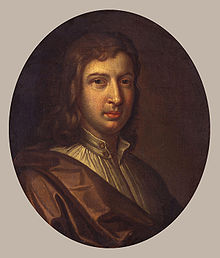
John Philips, author of “The Splendid Shilling”, a poem about a debtor who didn’t have a shilling, was born on December 30th, 1676.  His life was short.  Philips died in 1709, at the age of 32. 

Any individual who has a monument in his name in Westminster Abbey has made an impact on people, however short his or her life.  Philips’s phrase ’splendid shilling’ is found in a letter from the late 1700’s, which was included in “Ballantyne’s Novelist’s Library”, a work which Walter Scott wrote biographical sketches for, and saw through production after his friend John Ballantyne died.  The letter was written by Henry Cheslyn, addressed to his brother John. From that letter:

‘…Tom [Sutton, a friend], as thou knowest, with little more than a splendid shilling in his purse, has as kind propensities to his fellow creatures, as would canonize a bishop, if bishops were canonized for benevolence…’

"The Splendid Shilling" begins:

‘HAPPY the Man, who void of Cares and Strife,
In Silken, or in Leathern Purse retains
A Splendid Shilling: He nor hears with Pain
New Oysters cry'd, nor sighs for chearful Ale;

Thursday, December 30, 2010

George Huntly Gordon

December 30 [1825]'...Dined alone with Gordon, Lady S., and Anne. James Curle, Melrose, has handsomely lent me £600; he has done kindly. I have served him before and will again if in my power.

The Gordon referred to in this December 30 entry from Scott's Journal, was George Huntly Gordon, who served as an amanuensis for Scott.  JG Lockhart discusses Scott meeting the younger Gordon in his "Memoirs of the Life of Sir Walter Scott":

'It may perhaps be remembered, that Sir Walter's cicerone over Waterloo, in August 1815, was a certain Major. Pryse Gordon, then on half-pay and resident at Brussels. The acquaintance, until they met at Sir Frederick Adam's table, had been very slight—nor was it ever carried further; but the Major was exceedingly attentive during Scott's stay, and afterwards took some pains about collecting little reliques of the battle for Abbotsford. One evening the poet supped at his house, and there happened to sit next him the host's eldest son, then a lad of nineteen, whose appearance and situation much interested him. He had been destined for the Church of Scotland, but, as he grew up, a deafness, which had come on him in boyhood, became worse and worse, and at length his friends feared that it must incapacitate him for the clerical function. He had gone to spend the vacation with his father, and Sir Frederick Adam, understanding how he was situated, offered him a temporary appointment as a clerk in the Commissariat, which he hoped to convert into a permanent one, in case the war continued. At the time of Scott's arrival that prospect was wellnigh gone, and the young man's infirmity, his embarrassment, and other things to which his own memorandum makes no allusion, excited the visitor's sympathy. Though there were lion-hunters of no small consequence in the party, he directed most of his talk into the poor clerk's ear-trumpet; and at parting, begged him not to forget that he had a friend on Tweedside....'

Wednesday, December 30, 2009

The Wars of the Roses

"...The Queen's dress was black, without any adornment except a gold coronel of an inch in breadth, restraining her long black tresses, of which advancing years, and misfortunes, had partly altered.  There was placed within the circlet a black plume with a red rose, the last of the season, which the good father who kept the garden had presented to her that morning, as the badge of her husband's house..."

The quote above is from Walter Scott's "Anne of Geierstein".  The wars between the Houses of York and Lancaster, which took place between 1455 - 1487, may have come down to us by a different name, if it were not for this novel.  Though set in central Europe (esp. Switzerland), rather than England,  Scott's use of the rose device fed familiarity of this episode in English history.  Time-wise, the novel is set after the Battle of Tewkesbury, which was a victory for Yorkist forces. 

Richard Plantagenet, 3rd Duke of York, was killed in one of the earlier battles; Wakefield.  On December 30, 1460, York and his forces left their stronghold of Sandal Castle to attack Lancastrian forces who had taken the city of York.  Richard died during the fight, and his head was later displayed by the Lancastrians on a spike over Micklegate Bar at York.