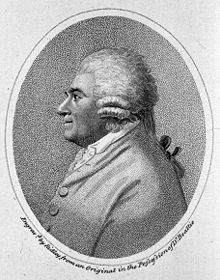
The poet James Beattie was born on October 25th, 1735. Perhaps the most significant connection between Beattie and Sir Walter Scott is the discovery, this past May, of Beattie’s lost 9,000 word poem “Grotesquaid” in the Abbotsford library. Beattie’s poem “Minstrel” is his most famous.
Showing posts with label October 25. Show all posts
Tuesday, October 25, 2011
Monday, October 25, 2010
Geoffrey Chaucer
The father of English literature, as some consider him, died on October 25, 1400. Chaucer's most famous work was his Canterbury Tales. Sir Walter Scott certainly read his works, as he made several allusions (and references) to Chaucer in his correspondence with others.
One individual with whom Scott exchanged several letters was dramatist Joanna Baillie. On December 12, 1811 Scott writes to Ms. Baillie of her work as a playwright: '...While I was watching my infant or rather embryo oaks you have been wandering under the shade of those celebrated by Pope and Denham or in a still earlier age by Surrey and Chaucer. How often have you visited the site of Hearnes oak and calld up the imaginary train of personages who fill the stage around it in representation?...'
Earlier, in a letter to William Clerk (September 30, 1792), Scott invokes Chaucer in a more analytical reference on the inhabitants of Hexham: '...Hard by the town is the field of battle where the forces of Queen Margaret were defeated by those of the House of York- a blow which the Red Rose never recovered during the civil wars. The spot where the Duke of Somerset and the northern nobility of the Lancastrian faction were executed after the battle, is still called Dukesfield. The inhabitants of this country speak an odd dialect of the Saxon, approaching nearly that of Chaucer, and have retained some customs peculiar to themselves. They are the descendants of the ancient Danes, chased into the fastnesses of Northumberland by the severity of William the Conqueror...'
One individual with whom Scott exchanged several letters was dramatist Joanna Baillie. On December 12, 1811 Scott writes to Ms. Baillie of her work as a playwright: '...While I was watching my infant or rather embryo oaks you have been wandering under the shade of those celebrated by Pope and Denham or in a still earlier age by Surrey and Chaucer. How often have you visited the site of Hearnes oak and calld up the imaginary train of personages who fill the stage around it in representation?...'
Earlier, in a letter to William Clerk (September 30, 1792), Scott invokes Chaucer in a more analytical reference on the inhabitants of Hexham: '...Hard by the town is the field of battle where the forces of Queen Margaret were defeated by those of the House of York- a blow which the Red Rose never recovered during the civil wars. The spot where the Duke of Somerset and the northern nobility of the Lancastrian faction were executed after the battle, is still called Dukesfield. The inhabitants of this country speak an odd dialect of the Saxon, approaching nearly that of Chaucer, and have retained some customs peculiar to themselves. They are the descendants of the ancient Danes, chased into the fastnesses of Northumberland by the severity of William the Conqueror...'
Sunday, October 25, 2009
King Stephen of England
Stephen of Blois was the grandson of William the Conqueror, and King of England from 1135 - 1154, when he died (October 25th). Stephen is mentioned briefly in Scott's Woodstock, more as story setting than an important part of plot:
"She could tell too, exactly, where King Stephen sat when he darned his own princely hose..."
Stephen was the last of the Norman line of Kings, though his line of descent came through his mother Adela, who was the Conqueror's daughter, rather than through William's son Henry. Henry (I) preceded Stephen to the throne, and named his daughter Matilda to succeed him. Stephen initially supported Matilda, but later claimed that on Henry's deathbed, he had named Stephen as heir to the throne. Matilda was unpopular, and the nobles supported Stephen, who won the crown. His reign was marked however, by civil war with Matilda. This time of troubles was known as The Anarchy. It was settled by the Treaty of Wallingford, which named Matilda's son Henry Curtmantle as heir to the throne after Stephen. Henry II became king in 1154, following Stephen's death.
"She could tell too, exactly, where King Stephen sat when he darned his own princely hose..."
Stephen was the last of the Norman line of Kings, though his line of descent came through his mother Adela, who was the Conqueror's daughter, rather than through William's son Henry. Henry (I) preceded Stephen to the throne, and named his daughter Matilda to succeed him. Stephen initially supported Matilda, but later claimed that on Henry's deathbed, he had named Stephen as heir to the throne. Matilda was unpopular, and the nobles supported Stephen, who won the crown. His reign was marked however, by civil war with Matilda. This time of troubles was known as The Anarchy. It was settled by the Treaty of Wallingford, which named Matilda's son Henry Curtmantle as heir to the throne after Stephen. Henry II became king in 1154, following Stephen's death.
Subscribe to:
Posts (Atom)