Showing posts with label Lay of the Last Minstrel. Show all posts

Tuesday, May 8, 2012

Cristabel

‘In the following month (May 8, 1816) Mr. Coleridge offered Mr. Murray
his "Remorse" for publication, with a Preface. He also offered his poem
of "Christabel," still unfinished. For the latter Mr. Murray agreed to
give him seventy guineas, "until the other poems shall be completed,
when the copyright shall revert to the author," and also £20 for
permission to publish the poem entitled "Kubla Khan."…’

Coleridge’s “Christabel” has a controversial connection with Walter Scott, since Scott heard Coleridge recite an early version, in 1802.  As related on the Spencerians.cath.vt.edu website, Scott borrowed a line and something of the cadence from Coleridge’s poem in his "Lay of the Last Minstrel".  It took until 1816 for Coleridge to reach a conclusion and publish, thanks to publisher John Murray.  The text above comes from Samuel Smiles’ “A Publisher and his Friends”.

Tuesday, October 25, 2011

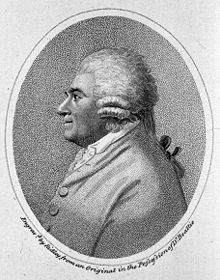
James Beattie


The poet James Beattie was born on October 25th, 1735.  Perhaps the most significant connection between Beattie and Sir Walter Scott is the discovery, this past May, of Beattie’s lost  9,000 word poem “Grotesquaid” in the Abbotsford library.  Beattie’s poem “Minstrel” is his most famous. 

Tuesday, May 24, 2011

David I of Scotland

King David I of Scotland died on May 24, 1153.  David's time was one of great administrative reforms, one of which was the establishment of Abbeys, including Melrose Abbey.  Melrose is believed to be the resting place of Robert the Bruce's heart.  Melrose Abbey figures in Walter Scott's "The Lay of the Last Minstrel".  The Second Canto of this poem begins:
'If thou would'st view fair Melrose aright,
Go visit it by the pale moonlight;
For the gay beams of lightsome day
Gild, but to flout, the ruins grey.
When the broken arches are black in night,
And each shafted oriel glimmers white;
When the cold light's uncertain shower
Streams on the ruin'd central tower;
When buttress and buttress, alternately,
Seem framed of ebon and ivory;
When silver edges the imagery,
And the scrolls that teach thee to live and die;
When distant Tweed is heard to rave,
And the owlet to hoot o'er the dead man's grave,
Then go--but go alone the while--
Then view St. David's ruin'd pile;
And, home returning, soothly swear,
Was never scene so sad and fair!'

Sunday, February 13, 2011

Kenneth MacAlpin

Kenneth I, King of the Picts, died on February 13, 858.  Nearly a milleneum later he was remembered in the name Buccleuch as referred to in Sir Walter Scott's "The Lay of the Last Minstrel":

VIII


The dwarf, who feared his master's eye
Might his foul treachery espie,
Now sought the castle buttery,
Where many a yeoman, bold and free,
Revelled as merrily and well
As those that sat in lordly selle.
Watt Tinlinn there did frankly raise
The pledge to Arthur Fire-the-Braes;
And he, as by his breeding bound,
To Howard's merrymen sent it round.
To quit them, on the English side,
Red Roland Forster loudly cried,
'A deep carouse to yon fair bride!'
At every pledge, from vat and pail,
Foamed forth in floods the nut-brown ale,
While shout the riders every one;
Such day of mirth ne'er cheered their clan,
Since old Bucclench the name did gain,
When in the clench the buck was ta'en.
 
Note on Line 154. Since old Buccleuch the name did gain.


A tradition preserved by Scott of Satchells gives the followmg romantic origin of that name. Two brethren, natives of Galloway, having been banished from that country for a riot, or insurrection, came to Rankleburn, in Ettrick Forett, where the keeper, whose name was Brydone received them joyfully, on account of their skill in winding the horn, and in the other mysteries of the chase, Kenneth MacAlpin, then King of Scotland, came soon after to hunt in the royal forest, and pursued a buck from Ettrickbeuch to the glen now called Buckeleuch, about two miles above the junction of Rankleburn with the river Ettrick. Here the stag stood at bay; and the king and his attendants, who followed on horseback, were thrown out by the steepness of the hill and the morass.  John, one of the brethren from Galloway, had followed the chase on foot and now coming in seized the buck by the horns, and being a man of great strength and activity, threw him on his back, and ran with his burden about a mile up the steep hill, to a place called Cracra-Cross. where Kenneth had halted, and laid the buck at his sovereign's feet.

Wednesday, January 26, 2011

Francis Jeffrey

Francis Jeffrey was the first official editor of the Edinburgh Review, which began in 1802.  Basically concurrent with Sir Walter Scott, Jeffrey was born in 1773, and died on January 26, 1850.  Jeffrey knew Scott from the Speculative Society, which they were both members of.  But knowing Scott didn't prevent Scott from canceling his subscription to the Review after Jeffrey wrote an article critical of the British military effort in Spain.

The April 1805 Review contained a criticism of Scott's "The Lay of the Last Minstrel", beginning:

'We consider this poem as an attempt to transfer the refinements of modern poetry to the matter and the manner of the ancient metrical romance. The author, enamoured of the lofty visions of chivalry, and partial to the strains in which they were formerly embodied, seems to have employed all the resources of his genius in endeavouring to recall them to the favour and admiration of the public; and in adapting to the taste of modern readers a species of poetry which was once the delight of the courtly, but has long ceased to gladden any other eyes than those of the scholar and the antiquary. This is a romance, therefore, composed by a minstrel of the present day; or such a romance as we may suppose would have been written in modern times, if that style of composition had continued to be cultivated, and partaken consequently of the improvements which every branch of literature has received since the time of its desertion....'

Friday, October 15, 2010

Virgil

One of the great poets of all time, the Roman Virgil was born (named Publius Vergilius Maro) on October 15, 70BCE.  Virgil is best known for his Aeneid.  Aside from his linguistic skills, Virgil was also considered somewhat of a magus, as commented on in the notes to Walter Scott's "The Lay of the Last Minstrel", Canto VI:

'...The arts of subjecting the daemons were manifold; sometimes the fiends were actually swindled by the magicians, as in the case of the bargain betwixt one of their number and the poet Virgil. The classic reader will doubtless be curious to peruse this anecdote.


" Virgilius was at scole at Tolenton, where he stodyed dyligently, for he was of great understandynge. Upon a tyme, the scolers had lycense to go to play and sporte them in the fyldes, after the usaunce of the holde tyme. And there was also Virgilius therbye, also walkynge amonge the hylles alle about. It fortuned he spyed a great hole in the syde of a great hyll, wherein he went so depe, that he culde not see no more lyght; and then he went a lytell farther therin, and than he saw some lyght agayne, and than he went fourth streyghte, and within a lytyll wyle after he harde a voyce that called " Virgilius ! Virgilius !" and loked aboute, and he colde nat see no body. Than sayd he (i. e. the voice), " Virgilius, see ye not the lyttyll bourde lyinge bysyde you there markd with that word ?" Than answerd Virgilius, " I see that borde well anough." The voyce sayd, " Doo awaye that borde, and lette me out there atte." Than answered Virgilius to the voyce that was under the lytell borde, and sayd, " Who art thou that calles me so ?" Than answered the Devyll, " I am a devyll conjured out of the body of a certeyne man, and banysshed here tyll the day of judgemend, without that I be delyvered by the handes of men. Thus, Virgilius, I pray the, delyvere me out of this payn, and I shall shewe unto the many bokes of nygromancy, and how thou shalt come by it lyghtly, and know the practise therein, that no man in the scyence of negromancye shall passe the. And moreover, I shall shewe and enforme the so, that thou shalt have alle thy desyre, wherby mythinke it is a great gyfte for so lytyll a doynge. For ye may also thus all your power frendys helpe, and make ryche your ennemyes." Thorough that great promyse was Virgilius tempted; he badde the fynd show the bokes to him, that he might have and occupy them at his wyll, and so the fynde shewed hym. And than Virgilius pulled open a bourde, and there was a lytell hole, and therat wrang the devyll out lyke a yeel, and cam and stode by fore Virgilius lyke a bygge man; wherof Virgilius was astonied and marveyled greatly therof, that so great a man myght come out at so lytell a hole. Than sayd Virgilius, " Shulde ye well passe into the hole that ye cam out of?" " Yea, I shall well," sayd the devyll. " I holde the best plegge that I have that ye shall not do it." " Well," sayd the devyll, " therto I consent." And than the devyll wrange himselfe into the lytell hole ageyne; and as he was therein, Virgilius kyverd the hole ageyn with the bourde close, and so was the devyll begyled, and myght nat there come out agen, but abydeth shytte styll therin. Than called the devyll dredefully to Virgilius, and sayd, " What have ye done, Virgilius ?" Virgilius answerd, " Abyde there styll to your day apoynted ;" and fro thens forth abydeth he there. And so Virgilius became very connynge in the practyse of the blacke scyence."

Wednesday, June 2, 2010

Prince Henry Sinclair Lands in Nova Scotia in 1398

"...This adventurous huntsman married Elizabeth, daughter of Malice Spar, Earl of Orkney and Stratherne, in whose right their son Henry was, in 1379, created Earl of Orkney, by Haco, king of Norway. His title was recognized by the Kings of Scotland, and remained with his successors until it was annexed to the crown, in 1471, by act of Parliament. In exchange for this earldom, the castle and domains of Ravenscraig, or Ravensheuch, were conferred on William Saintclair, Earl of Caithness " (Scott).

From the notes to Scott's "Lay of the Last Minstrel", which contains several St. Clair references.

Not all are convinced that Prince Henry Sinclair's voyage to what later became America occurred, but today, June 2, in 1398, is the date credited with Prince Henry's landing at Chadebucto Bay (now Trin Bay), in Nova Scotia (http://sinclair.quarterman.org/timeline.html).

Wednesday, March 24, 2010

Union of the Crowns

"A fancied moss-trooper, frc.


This was the usual appellation of the marauders upon the Borders ; a profession diligently pursued by the inhabitants on both sides, and by none more actively and successfully than by Buccleuch's clan. Long after the union of the crowns, the mosstroopers, although sunk in reputation, and no longer enjoying the pretext of national hostility, continued to pursue their calling.

Fuller includes, among the wonders of Cumberland, "The moss-troopers: so strange in the condition of their living, if considered in their Original, Increase, Height, Decay, and Buine. "

The quote above is a note from Scott's "Lay of the Last Minstrel", which references the Union of the Crowns of England and Scotland.  On March 24, 1603, Queen Elizabeth I of England died at Richmond Palace, to be followed by James VI of Scotland/I of England.  The moss-troopers operated largely during the time of the English Commonwealth, relying of their knowledge of border bogs for stealthy operations.

Wednesday, February 24, 2010

Battle of Roslin

The Battle of Roslin (February 24, 1303) was one of the earliest skirmishes in the First War of Scottish Independence.  The battle involved, according to some sources (incl. the Clan Sinclair website), approximately 8,000 Scots, and up to 30,000 highly trained English troops.  The trigger for this altercation seems to be jealousy, on the part of Sir John Segrave, who served as Edward I of England's commander in Scotland.  The object of Segrave's desire was Lady Margaret Ramsay of Dalhousie, who had fallen in love with Sir Henry Sinclair of Rosslyn.

Segrave, based in Carlyle England, learned of Margaret's intention to marry Henry, and quickly obtained permission from Edward to invade Scotland.  A Cistercian prior known as Abernethy is said to have learned of Segrave's movements, and dispatched monks to warn various Scottish nobles.  Several significant Scottish leaders answered the call, including John Comyn, William Wallace, Henry Sinclair, and Simon Fraser, who was elected to lead the Scottish forces.  The battle ended with an absolute rout of the English, and Henry happily married Margaret.

Roslin Castle figures prominently in Walter Scott's "The Lay of the Last Minstrel":

"...With war and wonder all on flame,
To Roslin's bowers young Harold came,
Where, by sweet glen and greenwood tree,
He learn'd a milder minstrelsy;
Yet something of the Northern spell
Mix'd with the softer numbers well..."

Wednesday, November 4, 2009

Saint Clarus

On this date, about 894, Saint Clarus was martyred. Clarus was of English extraction, and was murdered at the behest of a local noble woman, described historically as lewd and impious. The village where Clarus was martyred, on the Epte River in France, bears his name. Clarus is one derivation of the St. Clair, Sinclair family names.

Scott writes of the St. Clair faimly often, including in the Lay of the Last Minstrel. Scott is very familiar with Roslin Chapel, which has become popular now with the publication of Dan Brown's "Da Vinci Code".
...
"So still they blaze when fate is nigh,
The lordly line of high St. Clair.

There are twenty of Roslin's barons bold,
Lie buried within that proud Chapelle..."

Wednesday, October 21, 2009

Samuel Taylor Coleridge

Coleridge was born on this day, in 1772. He was contemporary with Scott, and unwittingly played a major role in Scott's success. In the fall of 1802, Scott heard an unpublished version of Coleridge's "Christabel"; recited by John Stoddart. Scott published his "The Lay of the Last Minstrel" in 1805, well before Christabel was published. It did not take long before Coleridge's friends noticed similarities in the two works. In fact, some of the verses are nearly identical. For example, Scott used the refrain, "Jesu Maria, shield us well!" Coleridge's original was "Jesu Maria, shield her well!"

Coleridge was charged with plagiarism by an anonymous reviewer when his Christobel was published. The opposite was more true. It took until 1824 for Scott to confess to Lord Byron that he had been influenced by Coleridge's work. Finally in 1830, in his Poetical Works, Scott publicly admitted to borrowing from Coleridge.

Tuesday, October 20, 2009

Belted Will

Lord William Howard died this day, in 1640. Belted, or Bold Will was the 3rd son of Thomas Howard, 4th Duke of Norfolk, who was an extremely powerful noble. When Will was nine, Elizabeth I beheaded his father, Duke Thomas, over Thomas' devotion to Mary Queen of Scots. Will was imprisoned several times during the 1580's on suspicion of treasonable intentions. He became Catholic in 1584, after his first imprisonment by Elizabeth I. Elizabeth dispossessed Howard of some of his estates at this point. These were later restored for a fine of 10,000 pounds. Howard's stronghold was Naworth Castle.

Scott wrote about Belted Will in his Lay of the Last Minstrel:

'Costly his garb, his Flemish ruff,
Fell o'er his doublet, shaped of buff,
With satin slash'd and lined;
Tawny his boot and gold his spur,
His cloak was all of Poland fur,
His hose with silver twined;
His Bilboa blade, by marchmen felt,
Hung in a broad and studded belt.'