Showing posts with label October 27. Show all posts

Thursday, October 27, 2011

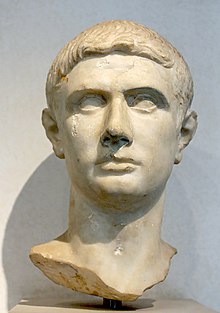
Brutus

‘…But it is not private life alone, or that tenor of thought which has been depressed into melancholy by gloomy anticipations respecting the future, which disposes the mind to midday fantasies, or to nightly apparitions—a state of eager anxiety, or excited exertion, is equally favourable to the indulgence of such supernatural communications. The anticipation of a dubious battle, with all the doubt and uncertainty of its event, and the conviction that it must involve his own fate, and that of his country, was powerful enough to conjure up to the anxious eye of Brutus the spectre of his murdered friend Cesar, respecting whose death he perhaps thought himself less justified than at the Ides of March, since instead of having achieved the freedom of Rome, the event had only been the renewal of civil wars, and the issue might appear most likely to conclude in the total subjection of liberty. It is not miraculous, that the masculine spirit of Marcus Brutus, surrounded by darkness and solitude, distracted probably by recollection of the kindness and favour of the great individual whom he had put to death to avenge the wrongs of his country, though by the slaughter of his own friend, should at length place before his eyes in person the appearance which termed itself his evil Genius, and promised again to meet him at Philippi. Brutus's own intentions, and his knowledge of the military art, had probably long since assured him that the decision of the civil war must take place at or near that place; and, allowing that his own imagination supplied that part of his dialogue with the spectre, there is nothing else which might not be fashioned in a vivid dream or a waking revery, approaching, in absorbing and engrossing character, the usual matter of which dreams consist. That Brutus, well acquainted with the opinions of the Platonists, should be disposed to receive without doubt the idea that he had seen a real apparition, and was not likely to scrutinize very minutely the supposed vision, maybe naturally conceived; and it is also natural to think, that although no one saw the figure but himself, his contemporaries were little disposed to examine the testimony of a man so eminent, by the strict rules of cross-examination and conflicting evidence, which they might have thought applicable to another person, and a less dignified occasion….’

Marcus Brutus’ birthday is known to be in late October.  Chambers’ Book of Days applies the date of October 27th, in the year 42 B.C.  Sir Walter Scott’s insightful comments are published in his “Letters on Demonology and Witchcraft”.

Wednesday, October 27, 2010

Commissary Smollett and Cameron House

On October 27, 1773, the Johnson/Boswell Tour of the Western Isles, which we have been following intermittently, is winding down.  The duo visits Commissary Smollett's Cameron House (from "The Journal of a Tour to the Hebrides with Samuel Johnson, LL.D."):

'...We were favoured with Sir James Colquhoun's coach to convey us in the evening to Cameron, the seat of Commissary Smollet. Our satisfaction of finding ourselves again in a comfortable carriage was very great. We had a pleasing conviction of the commodiousness of civilization, and heartily laughed at the ravings of those absurd visionaries who have attempted to persuade us of the superior advantages of a state of nature.

Mr Smollet was a man of considerable learning, with abundance of animal spirits; so that he was a very good companion for Dr Johnson, who said to me, 'We have had more solid talk here than at any place where we have been.'...'

On the banks of the Leven River, there is a column dedicated to Commissary Smollett that Samuel Johnson helped inscribe. 

Sir Walter Scott was familiar with Commissary Smollett, who died in 1775, perhaps mainly through Commissary's cousin, the author Tobias.  Scott published "Select Works of Tobias Smollett", adding his own Prefatory Memoir of the Life and Writings of Tobias Smollett".  Scott includes references to Cameron House and Commissary Smollett in this preface:

'Tobias Smollett (baptized Tobias-George) was born in 1721, in the old house of Dalquhurn, in the valley of Leven, in perhaps the most beautiful district in Britain. Its distinguished native has celebrated the vale of Leven, not only in the beautiful ode addressed to his parent stream, but in the expedition of Humphrey Clinker, where he mentions the home of his forefathers in the following enthusiastic, yet not exaggerated terms; "A veiy little above the source of the Leven, on the lake, stands the house of Cameron, belonging to Mr Smollett,* so embosomed in an oak wood that we did not see it till we were within fifty yards of the door. The lake approaches, on one side, to within six or seven yards of the window. It might have been placed in a higher situation, which would have afforded a more extensive prospect, and a drier atmosphere ; but this imperfection is not chargeable on the present proprietor, who purchased it ready built, rather than be at the trouble of repairing his own family house of Bonhill, which stands two miles from hence, on the Leven, so surrounded with plantations, that it used to be known by the name of the mavis (or thrush) nest. Above that house is a romantic glen, or cleft of a mountain, covered with hanging woods, having, at bottom, a stream of fine water, that forms a number of cascades in its descent to join the Leven, so that the scene is quite enchanting.
* The late Commissary Smollett '
Commissary (James) Smollett is introduced by Tobias into his own novel "The Expedition of Humphry Clinker", which Scott mentions in the passage above.

Tuesday, October 27, 2009

Hester Chapone

Hester Mulso Chapone was born this day, in 1727, and was contemporary with Scott. Chapone wrote advice books for women, and is best known for her "Letters on the Improvement of the Mind" (1773). Samuel Johnson was familiar with her work, publishing four of her pieces on women in The Rambler.

Chapone was a friend of Elizabeth Montagu, and a bluestocking women herself. The Bluestocking Society in England was formed by Ms. Montagu around 1750, in imitation of a French group of the same name. The appelation "Bluestocking" may refer to worsted stockings that were worn casually in the 18th century, but more likely refers to a blue stocking that fashionable Parisian women wore at that time. In any event the society consisted of women who pursued intellectual ambitions, which went against the grain of English society in the 1700's.