Showing posts with label A Publisher and His Friends. Show all posts

Tuesday, May 8, 2012

Cristabel

‘In the following month (May 8, 1816) Mr. Coleridge offered Mr. Murray
his "Remorse" for publication, with a Preface. He also offered his poem
of "Christabel," still unfinished. For the latter Mr. Murray agreed to
give him seventy guineas, "until the other poems shall be completed,
when the copyright shall revert to the author," and also £20 for
permission to publish the poem entitled "Kubla Khan."…’

Coleridge’s “Christabel” has a controversial connection with Walter Scott, since Scott heard Coleridge recite an early version, in 1802.  As related on the Spencerians.cath.vt.edu website, Scott borrowed a line and something of the cadence from Coleridge’s poem in his "Lay of the Last Minstrel".  It took until 1816 for Coleridge to reach a conclusion and publish, thanks to publisher John Murray.  The text above comes from Samuel Smiles’ “A Publisher and his Friends”.

Sunday, April 29, 2012

Works on Napoleon


Following yesterday’s post with a little more on Walter Scott’s friend Lord Byron, Scott enjoyed more initial success with his work on Napoleon, than Byron did with his “Ode to Napoleon Bonaparte”.  On April 29th, 1814, Byron responded to letter from publisher John Murray, offering effectively to relieve Murray from having to publish further of his poetry, after the failure of this ode.  Both Murray’s and Byron’s letters are found in Samuel Smiles’ “A Publisher and his Friends”

‘[Murry to Byron]…The "Ode to Napoleon Bonaparte," which appeared in April 1814, was on
the whole a failure. It was known to be Lord Byron's, and its
publication was seized upon by the press as the occasion for many bitter
criticisms, mingled with personalities against the writer's genius and
character. He was cut to the quick by these notices, and came to the
determination to buy back the whole of the copyrights of his works, and
suppress every line he had ever written. On April 29, 1814, he wrote to
Mr. Murray:

Lord Byron to John Murray.

April 29, 1814.

I enclose a draft for the money; when paid, send the copyrights. I
release you from the thousand pounds agreed on for "The Giaour" and
"Bride," and there's an end.... For all this, it might be well to assign
some reason. I have none to give, except my own caprice, and I do not
consider the circumstance of consequence enough to require
explanation.... It will give me great pleasure to preserve your
acquaintance, and to consider you as my friend. Believe me very truly,
and for much attention,

Yours, etc.,

BYRON…’

After further communication from Murray, Byron reconsidered.

Tuesday, April 3, 2012

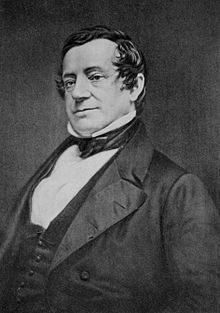
Washington Irving's Birth


Washington Irving was born on April 3rd, 1783, the son of Orcadian William Irving.  As noted previously in this blog, Sir Walter Scott helped Irving publish his “The Sketch Book of Geoffrey Crayon” in England.  The story is told in Samuel Smiles’ memoir of John Murray “A Publisher and his Friends”.

‘…A business in Liverpool, in which, with his brother, he [Irving] was a partner, proved a failure, and in 1818 he was engaged on his famous "Sketch Book," which he wrote in England, and sent to his brother Ebenezer in New York to be published there. The work appeared in three parts in the course of the year 1819. Several of the articles were copied in English periodicals and were read with great admiration. A writer in Blackwood
expressed surprise that Mr. Irving had thought fit to publish his
"Sketch Book" in America earlier than in Britain, and predicted a large
and eager demand for such a work. On this encouragement, Irving, who was
still in England, took the first three numbers, which had already
appeared in America, to Mr. Murray, and left them with him for
examination and approval. Murray excused himself on the ground that he
did not consider the work in question likely to form the basis of
"satisfactory accounts," and without this he had no "satisfaction" in
undertaking to publish.

Irving thereupon sought (but did not take) the advice of Sir W. Scott,
and entered into an arrangement with Miller of the Burlington Arcade,
and in February 1820 the first four numbers were published in a volume.
Miller shortly after became bankrupt, the sale of the book (of which one
thousand had been printed) was interrupted, and Irving's hopes of profit
were dashed to the ground. At this juncture, Walter Scott, who was then
in London, came to his help.


"I called to him for help as I was sticking in the mire, and, more
propitious than Hercules, he put his own shoulder to the wheel. Through
his favourable representations Murray was quickly induced to undertake
the future publication of the work which he had previously declined. A
further edition of the first volume was put to press, and from that time
Murray became my publisher, conducting himself in all his dealings with
that fair, open, and liberal spirit which had obtained for him the
well-merited appellation of the Prince of Booksellers." [Footnote:
Preface to the revised edition of "The Sketch Book."]

Irving, being greatly in want of money, offered to dispose of the work
entirely to the publisher, and Murray, though he had no legal protection
for his purchase, not only gave him £200 for it, but two months later
he wrote to Irving, stating that his volumes had succeeded so much
beyond his commercial estimate that he begged he would do him the favour
to draw on him at sixty-five days for one hundred guineas in addition to
the sum agreed upon. And again, eight months later, Murray made Irving a
second gratuitous contribution of a hundred pounds, to which the author
replied, "I never knew any one convey so much meaning in so concise and
agreeable a manner." The author's "Bracebridge Hall" and other works
were also published by Mr. Murray…’

Saturday, April 30, 2011

Blackwood Signs

On April 30, 1816, William Blackwood signed a contract with James Ballantyne, Scott's publisher, to print up to 6,000 copies of what became "The Black Dwarf".  Publisher John Murray worked with Blackwood in the London market.

The relationship between Blackwood and Murray began a few years earlier, when Murray visited Edinburgh, in the fall of 1814.  The development of their relationship is recounted in Samuel Smiles' "A Publisher and his Friends...":

'Among the friends that welcomed Mr. Murray to Edinburgh was Mr. William Blackwood, who then, and for a long time after, was closely connected with him in his business transactions. Blackwood was a native of Bradfute, booksellers, he was selected by Mundell & Company to take charge of a branch of their extensive publishing business in Glasgow. Hereturned to Edinburgh, and again entered the service of Bell et Bradfute; but after a time went to London to master the secrets of the old book trade under the well-known Mr. Cuthill. Returning to Edinburgh, he set up for himself in 1804, at the age of twenty-eight, at a shop in South Bridge Street--confining himself, for the most part, to old books. He was a man of great energy and decision of character, and his early education enabled him to conduct his correspondence with a remarkable degree of precision and accuracy. Mr. Murray seems to have done business with him as far back as June 1807, and was in the habit of calling upon Blackwood, who was about his own age, whenever he visited Edinburgh. The two became intimate, and corresponded frequently; and at last, when Murray withdrew from the Ballantynes, in August 1810 he transferred the whole of his Scottish agency to the house of William Blackwood. In return for the publishing business sent to him from London, Blackwood made Murray his agent for any new works published by him in Edinburgh. In this way Murray became the London publisher for Hogg's new poems, and Edinburgh; having served his apprenticeship with Messrs. Bell & "The Queen's Wake," which had reached its fourth edition.'

Thursday, December 23, 2010

Samuel Smiles

Scottish author Samuel Smiles was born on December 23, 1812.  Smiles is best known for his work titled "Self-Help", which sold more than a quarter million copies during his lifetime.  In "Self-Help",  Smiles dispensed wisdom such as: ' The spirit of self-help is the root of all genuine growth in the individual; and, exhibited in the lives of many, it constitutes the true source of national vigour and strength. Help from without is often enfeebling in its effects, but help from within invariably invigorates. Whatever is done for men or classes, to a certain extent takes away the stimulus and necessity of doing for themselves; and where men are subjected to over-guidance and over-government, the inevitable tendency is to render them comparatively helpless.'

Smiles also authored biographies, including "The Life of George Stephenson", and more directly related to Sir Walter Scott "A Publisher and his Friends. Memoir and Correspondence of the Late John Murray".  From that work:

 'Some of the most important events in Murray's career occurred during the first year of his married life. Chief among them may perhaps be mentioned his part share in the publication of "Marmion" (in February 1808)--which brought him into intimate connection with Walter Scott--and his appointment for a time as publisher in London of the Edinburgh Review; for he was thus brought into direct personal contact with those forces which ultimately led to the chief literary enterprise of his life--the publication of the Quarterly Review.


Mr. Scott called upon Mr. Murray in London shortly after the return of the latter from his marriage in Edinburgh.


"Mr. Scott called upon me on Tuesday, and we conversed for an hour....

He appears very anxious that 'Marmion' should be published by the King's birthday....

He said he wished it to be ready by that time for very particular reasons; and yet he allows that the poem is not completed, and that he is yet undetermined if he shall make his hero happy or otherwise."...'

Saturday, November 27, 2010

John Murray

Publisher John Murray's birth occurred on November 27, 1775, as covered in last year's post.  His death has also been mentioned in a previous post.

Murray first became involved in Walter Scott's works as a seller of books published by Archibald Constable.  The relationship with Constable developed after Murray dissolved his partnership with his father's former assistant, Samuel Highley.  The developing interaction between Murray and Constable is described in Samuel Smiles' "A Publisher and His Friends Memoir and Correspondence of John Murray; with an Account of the Origin and Progress of the House, 1768-1843".

'April_ 25, 1803.


"I have several works in the press which I should be willing to consign to your management in Edinburgh, but that I presume you have already sufficient business upon your hands, and that you would not find mine worth attending to. If so, I wish that you would tell me of some vigorous young bookseller, like myself, just starting into business, upon whose probity, punctuality, and exertion you think I might rely, and I would instantly open a correspondence with him; and in return it will give me much pleasure to do any civil office for you in London. I should be happy if any arrangement could be made wherein we might prove of reciprocal advantage; and were you from your superabundance to pick me out any work of merit of which you would either make me the publisher in London, or in which you would allow me to become a partner, I dare say the occasion would arise wherein I could return the compliment, and you would have the satisfaction of knowing that your book was in the hands of one who has not yet so much business as to cause him to neglect any part of it."

Mr. Constable's answer was favourable. In October 1804 Mr. Murray, at the instance of Constable, took as his apprentice Charles Hunter, the younger brother of A. Gibson Hunter, Constable's partner. The apprenticeship was to be for four or seven years, at the option of Charles Hunter. These negotiations between the firms, and their increasing interchange of books, showed that they were gradually drawing nearer to each other, until their correspondence became quite friendly and even intimate. Walter Scott was now making his appearance as an author; Constable had published his "Sir Tristram" in May 1804, and his "Lay of the Last Minstrel" in January 1805. Large numbers of these works were forwarded to London and sold by Mr. Murray.'